How Long Is a Hockey Game? Periods, Intermissions and Overtime Explained
It started with a simple question during a Toronto Maple Leafs broadcast on a Saturday night. A friend watching her first game asked, “So how long is a hockey game, anyway?” We figured it was a 30-second answer. Three hours later, we were deep in the NHL rulebook, comparing IIHF timing standards, and arguing about whether the clock should count up or down. The truth is, a hockey game is never just 60 minutes — and that’s exactly what makes it fascinating.
The Standard Three-Period Structure
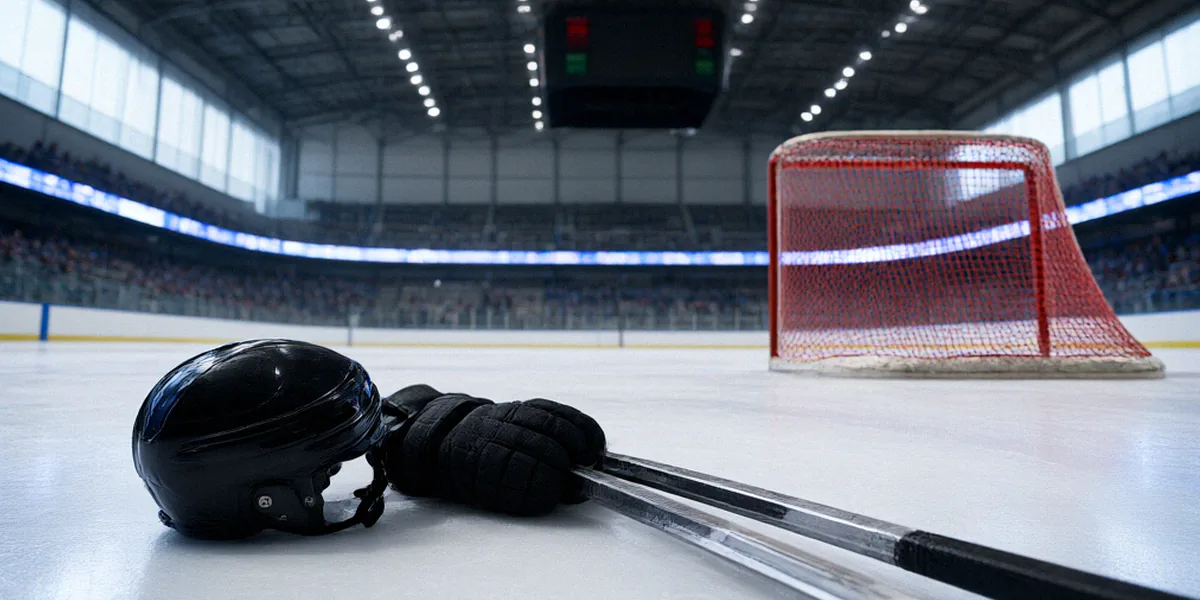
At its core, a regulation hockey game consists of three 20-minute periods, for a total of 60 minutes of official game time. That structure is shared by the NHL, the IIHF, and virtually every organized league in the world, from minor hockey in Manitoba to the Olympic final. But here’s the catch: those 60 minutes are not 60 consecutive minutes of real life.
Why Periods Are 20 Minutes
The three-period format has roots in early Canadian hockey, where games were split to give players rest and allow rinks to be cleared. Twenty minutes became the standard because it balances endurance with intensity — long enough for momentum to build, short enough that players can skate at full effort. Both the NHL rulebook and IIHF official rules codify three 20-minute periods as the regulation format.
Stop-Time vs. Running Time
In the NHL and at IIHF-sanctioned events, the clock is “stop-time”: it halts every time the whistle blows. That means a 20-minute period routinely takes 35 to 40 minutes of real time to complete. Running-time hockey — where the clock keeps moving — is used in some minor and recreational leagues to keep games short, but you’ll never see it in a professional or international game.
How Many Players on the Ice
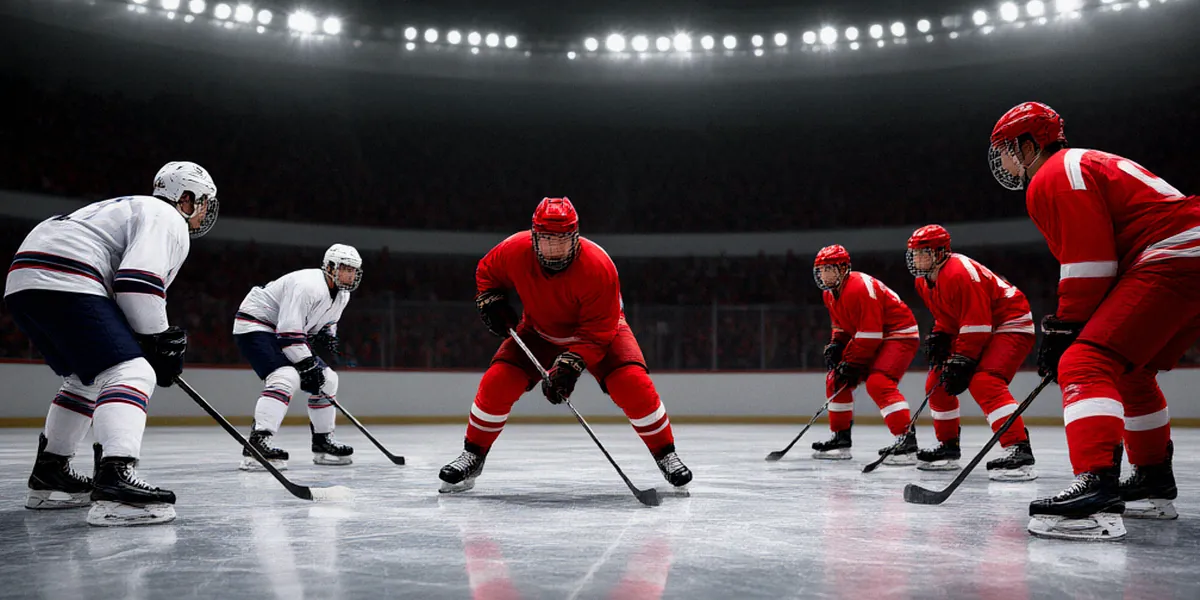
Each team dresses six skaters at even strength: three forwards, two defencemen, and a goaltender. Teams typically dress 18 skaters and two goalies per game, rolling four lines and three defensive pairings. Penalties reduce a team to five, four, or even three skaters, which is where power plays and shorthanded goals come from.
Intermissions: The 17-Minute Break
Between periods, teams get a break — and so do the fans. In the NHL, each intermission is 17 minutes. In IIHF play, including the World Juniors, intermissions run 18 minutes. That extra minute matters more than you’d think when you’re trying to squeeze in a Zamboni pass and a coaching adjustment.
What Happens During Intermission
Players retreat to the dressing room for repairs, hydration, and coaching adjustments. Meanwhile, the ice gets resurfaced, broadcasters run analysis, and arena crews handle everything from minor repairs to fan contests. On Hockey Night in Canada, the intermission is its own show — Coach’s Corner made the break appointment viewing for a generation of Canadian fans.
Zamboni and Ice Maintenance
The Zamboni — invented by Frank Zamboni in 1949 — shaves the ice surface, washes it, and lays down a fresh layer of hot water that freezes almost instantly. A full resurfacing takes about 7 to 10 minutes, leaving a few minutes of buffer before players return for warmups. Without it, the ice would be chewed up and dangerous within a single period.
TV Timeouts and Commercial Breaks
NHL broadcasts include TV timeouts — typically three per period, plus one after each goal — that stop play for roughly two minutes each. These breaks don’t affect the game clock, but they absolutely affect how long the game takes in real time. In international play, TV timeouts follow IIHF media regulations and are often shorter.
Overtime and Shootout Rules
If the game is tied after 60 minutes, the format changes depending on the league and the stakes. This is where hockey timing gets genuinely interesting — and where some of the sport’s most iconic moments have happened.
Regular Season: 3-on-3 and Shootout
In the NHL regular season, a tie after regulation goes to five minutes of 3-on-3 sudden-death overtime. If nobody scores, it’s a shootout: three shooters per side, then sudden-death rounds. The winning team gets two points; the loser gets one. This format was introduced in 2015 and has produced some of the most chaotic, wide-open hockey you’ll ever watch.
Playoffs: Sudden-Death Overtime
In the NHL playoffs, overtime means 20-minute periods of 5-on-5 sudden death, repeated until someone scores. No shootouts. Ever. Some playoff games have stretched into triple or quadruple overtime, running past midnight and into hockey folklore.
IIHF Overtime Differences
IIHF rules differ by tournament. At the World Juniors, preliminary-round games use a 3-on-3 overtime and shootout, while medal-round games use 20-minute sudden-death periods. World Juniors Canada games have produced some legendary overtime finishes — including the 2009 semifinal against Russia and the 2015 gold-medal win over Russia in Toronto.
How Long Does a Game Actually Take?
Officially, a hockey game is 60 minutes. In reality, it’s much longer. Here’s what to expect from puck drop to final horn:
- NHL regular season: about 2 hours 20 minutes to 2 hours 40 minutes
- NHL playoffs: 2 hours 30 minutes to 3 hours, longer with overtime
- IIHF and World Juniors: roughly 2 hours 15 minutes to 2 hours 30 minutes
- Overtime games: add 15 to 45+ minutes depending on how many extra periods are played
Average NHL Game Length
An average NHL game runs about 2.5 hours from puck drop to final buzzer. That includes three 20-minute periods, two 17-minute intermissions, TV timeouts, penalty stoppages, offsides, icings, and video reviews. If you’re heading to a 7 p.m. game at Scotiabank Arena, don’t plan on being home before 9:45 p.m.
World Juniors and IIHF Timing
World Juniors games tend to run slightly shorter because IIHF intermissions and TV timeouts are structured differently. But when Canada is in a knockout game, all bets are off — overtime thrillers have pushed broadcasts well past three hours and into the next morning for viewers in Europe.
Factors That Extend a Game
Penalties, fights, injuries, video reviews, and stoppages all add real-world time. A game with 12 minor penalties and three reviews will run noticeably longer than a clean, fast-paced affair. Overtime, of course, is the biggest wildcard of all.
Historical Perspective: The 1972 Summit Series
No event shaped modern hockey timing and rules quite like the 1972 Summit Series between Canada and the USSR. Eight games, two continents, and a political backdrop that turned every shift into a national moment. The series also revealed how differently the two hockey worlds approached the game — including how they handled overtime and tie games.
Game 8 and Paul Henderson’s Goal
In Game 8 at Luzhniki Ice Palace in Moscow, the series came down to the final period. With the score tied 5–5, Paul Henderson scored with 34 seconds remaining to win the game 6–5 and the series 4–3–1. There was no overtime. There was no shootout. The clock simply ran out — and Canada erupted.
Rule Changes After 1972
The Summit Series exposed gaps between North American and international rules, from icing to penalty enforcement to how games were decided. Over the following decades, the NHL and IIHF moved closer together on rules, and overtime formats evolved to avoid ties in meaningful games — a direct legacy of 1972.
IIHF Hall of Fame Inductees
Many 1972 Summit Series participants have been honoured by the IIHF Hall of Fame, including Henderson, Phil Esposito, and Vladislav Tretiak. Their induction reflects how much that series shaped international hockey history and continues to influence the way Canadian fans understand the game.
NHL Rules Explained: Clock and Timing Quirks
Even seasoned fans get tripped up by a few timing quirks. Here’s how the clock actually works when penalties and reviews come into play.
Penalty Clock and Power Plays
When a player is sent to the box for a minor penalty, the opposing team gets a power play for two minutes of game time. If the shorthanded team is scored on, the penalty ends immediately. Major penalties (five minutes) don’t end on a goal, which is why a single major can swing a game dramatically.
Delayed Penalties and Empty Net
If the referees plan to call a penalty but the offending team hasn’t touched the puck, play continues and the goalie is often pulled for an extra attacker — a “delayed penalty.” The clock keeps running until the offending team touches the puck, at which point the whistle blows and the power play begins.
Video Review and Time Adjustments
Video reviews can add several minutes to a game and occasionally reset the clock. Officials can review goals, offsides, and goaltender interference, and the clock is adjusted to reflect the correct time of the event. It’s one more reason a 60-minute game rarely finishes in 60 minutes.
FAQ
How long is a hockey game in real time?
An NHL game typically runs about 2.5 hours from puck drop to final horn. IIHF and World Juniors games usually run slightly shorter, around 2 hours 15 minutes to 2 hours 30 minutes.
How many periods are in a hockey game?
Three 20-minute periods, for 60 minutes of regulation time. If the game is tied, overtime and possibly a shootout follow, depending on the league and tournament rules.
Why are NHL intermissions 17 minutes?
Seventeen minutes gives enough time for a full Zamboni resurfacing, player recovery, coaching adjustments, and broadcast segments. The IIHF uses 18 minutes for the same reasons.
Did the 1972 Summit Series have overtime?
No. Game 8 ended in regulation when Paul Henderson scored with 34 seconds left. There was no overtime or shootout in the series — the clock simply decided it.
How long is overtime in the NHL?
Regular season: five minutes of 3-on-3, then a shootout. Playoffs: 20-minute periods of 5-on-5 sudden death, repeated until someone scores.
So there it is: a hockey game is officially 60 minutes, but the full experience — warmups, three periods, two intermissions, TV timeouts, and the occasional overtime thriller — usually runs closer to 2.5 hours. From the 1972 Summit Series to a random Tuesday night Leafs game, that extra time is where the drama lives. And for Canadian fans, that’s exactly the point.


Post Comment