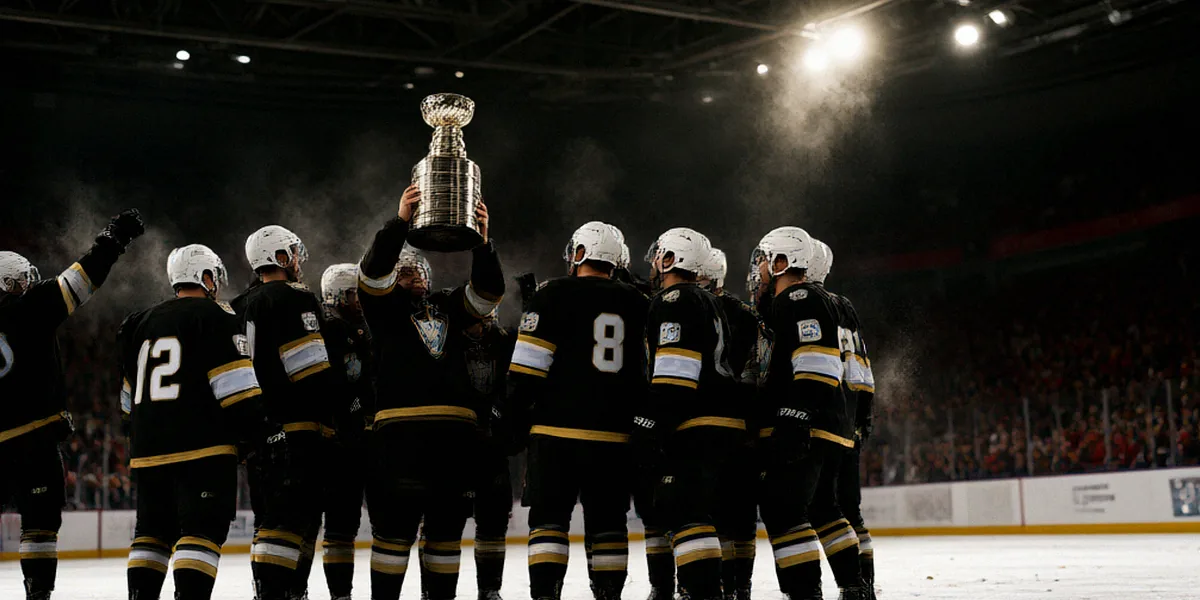
Russian-Born Players Who Lifted the Stanley Cup
We still remember the moment it happened. On June 7, 1997, the Detroit Red Wings swept the Philadelphia Flyers in the Stanley Cup Final, and somewhere in that celebration was a 27-year-old centre from Moscow whose name was about to be etched onto hockey’s most famous trophy. Sergei Fedorov became the first Russian-born player to have his name engraved on the Stanley Cup, and that single engraving cracked open a door that has never closed since. For Canadian fans who grew up watching the Summit Series and treating Soviet players as mysterious rivals behind an Iron Curtain, this was a seismic shift. The Cold War on ice had produced legends we only saw every few years. Now they were lining up beside Canadian stars in NHL dressing rooms. Let’s walk through the Russian-born players who have lifted the Cup, the moments that defined them, and why their stories still matter to hockey history north of the border.
The First Crack in the Iron Curtain: Sergei Fedorov and the 1997 Red Wings

Before Fedorov, Russian players in the NHL were a curiosity, not a cornerstone. He changed that, and he did it in a city that had waited 42 years for a championship.
Fedorov’s Defection and Early NHL Career
The Red Wings drafted Fedorov in the fourth round in 1989, a late pick that turned into one of the great steals in NHL draft history. Getting him out of the Soviet Union was another matter entirely. Fedorov defected in 1990, slipping away from the Soviet national team during a trip to North America — a move that mirrored Alexander Mogilny’s defection a year earlier and infuriated Soviet hockey officials. Once in Detroit, Fedorov’s two-way game and blazing speed made him an instant star. He won the Selke Trophy as the league’s best defensive forward and, in 1994, became the first Russian-born player to win the Hart Trophy as NHL MVP.
The 1997 Stanley Cup Final Against Philadelphia
The 1997 Final was a coronation for Detroit’s Russian Five unit — Fedorov, Igor Larionov, Vyacheslav Kozlov, Vladimir Konstantinov, and Viacheslav Fetisov — a five-man group that played a puck-possession style Canadian fans had rarely seen. The Red Wings swept Philadelphia in four straight games. Fedorov’s name went on the Cup first among Russian-born players, a fact that still carries weight in any serious discussion of hockey history. The celebration was bittersweet: days later, a limousine crash left Konstantinov with severe injuries that ended his career.
Fedorov’s 1998 Conn Smythe and 2002 Red Wings Repeat
Fedorov wasn’t done. He won the Conn Smythe Trophy in 1998 as playoff MVP, though Detroit fell short of repeating that spring. He got his second Cup in 2002 with a loaded Red Wings roster, then added a third in 2008 with the Anaheim Ducks. By the time he retired, Fedorov had done something no Russian-born player had done before: built a full Hall of Fame-calibre NHL career from start to finish.
The 2004 Tampa Bay Lightning: A Russian Trio Makes History
Seven years after Fedorov’s breakthrough, a different kind of Russian story unfolded in Florida. The 2004 Lightning were built around a young core, and three Russian-born players were central to the run.
Khabibulin’s Goaltending Mastery
Nikolai Khabibulin, nicknamed “The Bulin Wall,” was the backbone of Tampa Bay’s playoff run. He posted a .933 save percentage in the 2004 postseason, outduelling Calgary’s Miikka Kiprusoff in a seven-game Final that came down to the wire. Without Khabibulin, there is no Cup in Tampa in 2004.
Fedotenko’s Game 7 Heroics
Ruslan Fedotenko scored both goals in Game 7 of the 2004 Stanley Cup Final, a 2-1 Tampa Bay win over the Flames. It remains one of the most underrated Game 7 performances in NHL history — two goals, one trophy, zero margin for error. Dmitry Afanasenkov added depth scoring and physical play throughout the run, rounding out a Russian trio that Canadian fans should know by name.
The 2004 Lockout and the Cup’s Russian Legacy
The 2004-05 lockout wiped out the following season, which meant the Lightning never got a chance to defend their title. That lost year makes the 2004 Cup feel almost frozen in time. For Canadian fans, it’s a reminder of how quickly championship windows can close — and how important it is to appreciate the players who got it done when it mattered.
Evgeni Malkin and the Pittsburgh Penguins Dynasty
If Fedorov opened the door, Evgeni Malkin kicked it wide open. The Magnitogorsk native arrived in Pittsburgh in 2006 after a dramatic departure from his Russian club and immediately became one of the most dominant centres in the game.
Malkin’s 2009 Conn Smythe Run
Malkin won the Conn Smythe Trophy in 2009 after leading the Penguins past Fedorov’s old Red Wings in a seven-game Final. He posted 36 points in 24 playoff games, the kind of run that silences any debate about whether European players can carry a team through a North American playoff grind.
Back-to-Back Cups in 2016 and 2017
Malkin added back-to-back Cups with the Pittsburgh Penguins in 2016 and 2017, joining Sergei Gonchar as Russian-born champions in Pittsburgh (Gonchar won in 2009). The 2016 and 2017 runs were powered by Malkin, Sidney Crosby, and Phil Kessel — a trio that gave Pittsburgh one of the most dangerous offensive attacks of the salary-cap era.
Malkin’s Place Among Russian NHL Legends
With three Cups, a Conn Smythe, a Hart Trophy, and a Calder, Malkin sits comfortably alongside Fedorov and Ovechkin in any ranking of Russian-born NHL greats. For Canadian fans who watched him dismantle defences for nearly two decades, he’s a first-ballot legend regardless of passport.
The 2020 and 2021 Tampa Bay Lightning: Russian Core Delivers Again
Sixteen years after Khabibulin and Fedotenko raised the Cup, Tampa Bay did it again — twice in a row — with a Russian core that might be the deepest the NHL has ever seen.
Kucherov’s Playoff Dominance
Nikita Kucherov won the Conn Smythe Trophy in 2021 after back-to-back Stanley Cup wins with the Tampa Bay Lightning. His 2020 playoff run (34 points in 25 games) and 2021 run (32 points in 23 games) were among the most productive postseasons of the modern era. The 2021 Cup was won in a shortened season played under pandemic protocols, which makes the repeat even more impressive.
Vasilevskiy’s Conn Smythe-Worthy Goaltending
Andrei Vasilevskiy won the 2021 Vezina Trophy and the 2021 Conn Smythe Trophy, the first goaltender to win the Conn Smythe since 2012. His 2020 and 2021 playoff numbers were absurd — a .927 save percentage in 2020 and a .937 in 2021 — and he closed out both Finals with shutouts.
Sergachev and the Russian Defensive Pipeline
Mikhail Sergachev, acquired from Montreal in the 2017 Jonathan Drouin trade, became a top-four defenceman on both Cup runs. His development is a reminder that Russia keeps producing not just forwards and goalies, but elite two-way defencemen. Canadian fans watching the World Juniors every winter see the next wave coming years in advance.
Other Russian-Born Cup Winners Canadian Fans Should Know
The list of Russian-born Cup winners runs deeper than the headliners. Here are a few more names worth knowing.
- Alex Ovechkin captained the Washington Capitals to their first Stanley Cup in 2018, winning the Conn Smythe Trophy in the process.
- Sergei Brylin won three Cups with the New Jersey Devils (1995, 2000, 2003), a rare feat in the cap era.
- Evgeni Nabokov was on the 2000 New Jersey Devils roster, though he didn’t appear in a playoff game.
- Sergei Gonchar won with Pittsburgh in 2009 after a long career as one of the NHL’s best offensive defencemen.
- Igor Larionov won three Cups (Detroit 1997, 1998, 2002) and is enshrined in the IIHF Hall of Fame.
Alex Ovechkin and the 2018 Capitals
Ovechkin’s 2018 run ended years of playoff heartbreak in Washington and cemented his legacy as one of the greatest goal-scorers in NHL history. For Canadian fans, it was also a moment of respect — a Russian captain lifting the Cup in a Canadian-majority league, celebrated from Vancouver to Halifax.
Sergei Brylin’s Three Cups with New Jersey
Brylin never put up gaudy numbers, but he was a key role player on three Devils championship teams. His story is a reminder that Russian-born Cup winners aren’t always superstars — sometimes they’re the guys doing the dirty work on the third line.
Russian-Born Players in the IIHF Hall of Fame
The IIHF Hall of Fame includes Russian legends like Larionov, Vladislav Tretiak, and Valeri Kharlamov, whose careers were built largely outside the NHL. Their induction connects the Soviet era to the modern NHL game and gives Canadian fans a fuller picture of hockey history beyond North American borders.
These players have enriched NHL history for Canadian fans in ways that go beyond statistics. They brought a different style, a different hockey culture, and a different story to a league that was once almost entirely Canadian. Their legacies — and the next generation coming through the World Juniors and the KHL — will keep shaping international hockey for decades.
FAQ
Who was the first Russian-born player to win the Stanley Cup?
Sergei Fedorov became the first Russian-born player to have his name engraved on the Stanley Cup in 1997 with the Detroit Red Wings. He won again with Detroit in 1998 and 2002, and later with Anaheim in 2008.
How many Stanley Cups has Evgeni Malkin won?
Malkin has won three Stanley Cups with the Pittsburgh Penguins — in 2009, 2016, and 2017. He also won the Conn Smythe Trophy in 2009 as playoff MVP.
Did Nikita Kucherov win the Conn Smythe Trophy?
Yes. Nikita Kucherov won the Conn Smythe Trophy in 2021 after back-to-back Stanley Cup wins with the Tampa Bay Lightning in 2020 and 2021.
Which Russian player scored both goals in Game 7 of the 2004 Stanley Cup Final?
Ruslan Fedotenko scored both goals in Game 7 of the 2004 Stanley Cup Final, leading the Tampa Bay Lightning to a 2-1 win over the Calgary Flames.
Who captained the Washington Capitals to their first Stanley Cup?
Alex Ovechkin captained the Washington Capitals to their first Stanley Cup in 2018, defeating the Vegas Golden Knights in five games and winning the Conn Smythe Trophy.





Post Comment