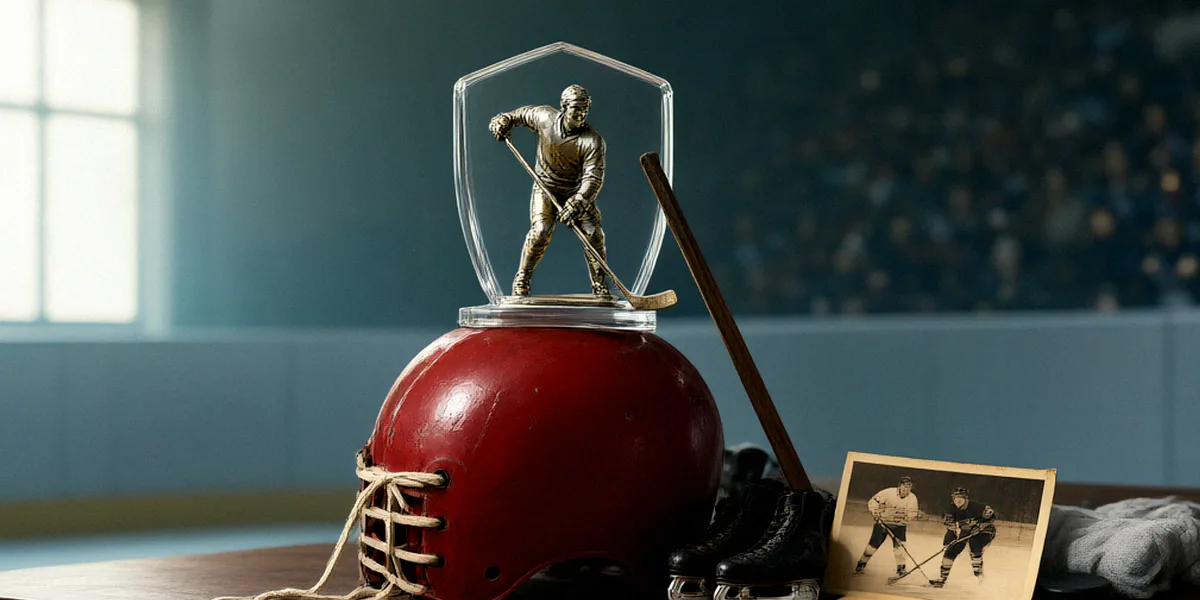
Soviet Hockey Legends Inducted into the IIHF Hall of Fame
When Paul Henderson scored with 34 seconds left in Game 8 of the 1972 Summit Series, a generation of Canadian fans learned something they never forgot: the Soviets could play. Valeri Kharlamov, Vladislav Tretiak, and their teammates turned a lopsided exhibition tour into the most dramatic hockey ever played. That series is why so many of us still follow international hockey closely, and it is why the IIHF Hall of Fame deserves a place in our hockey consciousness. This page walks through the Soviet legends who have been honored there, and what their careers mean to Canadian fans today.
What the IIHF Hall of Fame Is and Why It Matters to Canadian Fans

The IIHF Hall of Fame is the International Ice Hockey Federation’s official hall of honor. It recognizes players, coaches, referees, and builders who shaped the global game. For Canadian fans, it is a reminder that hockey history does not start and end at the NHL draft floor — it runs through Moscow, Prague, Stockholm, and a dozen other cities where the game grew in parallel with ours.
The Hall’s Origins and Selection Process
The IIHF Hall of Fame was founded in 1997, the same year the federation celebrated its 90th anniversary. Inductees are selected by an IIHF committee that weighs international achievements heavily: Olympic medals, IIHF World Championship titles, and contributions to the sport across borders. Induction ceremonies are typically held during the IIHF World Championship each spring, which means the honor is tied directly to the tournament where these players made their names.
Canadian inductees include Wayne Gretzky, Gordie Howe, and Maurice Richard, alongside Soviet and European greats. That mix is the point. The Hall treats international hockey as one shared story rather than a collection of national ones.
How Canadian Fans Can Visit and Celebrate
The IIHF Hall of Fame has been housed in several locations over the years, including Toronto during the 1990s and later in Zurich, Switzerland. If you are traveling for a World Championship or a European hockey trip, checking the current display location is worth the effort. Even from home, Canadian fans can engage with the Hall through:
- IIHF World Championship broadcasts, where new inductees are often recognized on air
- The IIHF’s official website, which maintains inductee profiles and historical archives
- Hockey Hall of Fame exhibits in Toronto that cover international hockey alongside NHL history
- World Juniors Canada tournaments, where international hockey history is frequently celebrated in host cities
The First Wave: Soviet Legends Who Broke Through
The earliest Soviet inductees into the IIHF Hall of Fame were the players Canadian fans met in 1972. Their reputations were built in Europe, but the 1972 Summit Series made them famous here. Two names stand above the rest.
Valeri Kharlamov: The Flash of the Summit Series
Valeri Kharlamov was the player who stunned Canada in Game 1 in Montreal. His skating, his stickhandling at full speed, and his ability to cut through traffic made him the most dangerous forward on the ice. Bobby Clarke’s slash to Kharlamov’s ankle in Game 6 remains one of the most debated moments in Canadian hockey history — a backhanded acknowledgment of how much he was controlling the series.
Kharlamov won 11 IIHF World Championship gold medals with the Soviet Union and two Olympic golds. He was inducted into the IIHF Hall of Fame in 1998. He died in a car accident in 1981 at age 33, cutting short a career that might have included an NHL chapter.
Vladislav Tretiak: The Wall of the Red Machine
Vladislav Tretiak faced 36 shots in Game 1 of the 1972 Summit Series and stopped almost everything. Across the eight games, he was the single biggest reason the series came down to the final minute. Tretiak later became the first Soviet-trained player inducted into the Hockey Hall of Fame in Toronto, and he was part of the IIHF Hall of Fame’s 1997 inaugural class.
His numbers in international play are absurd by any standard: three Olympic gold medals, 10 IIHF World Championship titles, and a career save percentage that stood up against the best in the world for two decades. For Canadian fans who grew up watching him, Tretiak is the face of Soviet hockey.
The Red Machine’s Core: More Soviet Inductees
The 1972 group opened the door, but the next generation of Soviet stars kept it open. By the 1980s, CSKA Moscow was producing players who could step directly into the NHL — and eventually did.
Sergei Makarov and the KLM Line
Sergei Makarov skated on the legendary KLM line with Igor Larionov and Vladimir Krutov. The trio terrorized international tournaments through the 1980s, winning IIHF World Championship golds and an Olympic gold in 1988. Makarov joined the Calgary Flames in 1989 and won the Calder Trophy as NHL rookie of the year at age 31 — a rule change followed, since the NHL had not anticipated a veteran European star qualifying as a rookie.
Makarov was inducted into the IIHF Hall of Fame in 2001 and the Hockey Hall of Fame in 2016. His career is a bridge between Soviet dominance and the modern NHL’s international makeup.
Viacheslav Fetisov: From CSKA to the NHL
Viacheslav Fetisov was the anchor of the Soviet defense for more than a decade. He won two Olympic golds, seven IIHF World Championship golds, and captained CSKA Moscow during its most dominant stretch. In 1989, he was allowed to leave for the NHL, joining the New Jersey Devils and later winning back-to-back Stanley Cups with the Detroit Red Wings in 1997 and 1998.
Fetisov was inducted into the IIHF Hall of Fame in 2005 and the Hockey Hall of Fame in 2001. His path from CSKA to Detroit helped normalize the idea that European stars could finish their careers in North America.
How Soviet Legends Shaped NHL Rules Explained Today
If you have ever wondered why the NHL changed its rules about clutching, hooking, or obstruction in the late 1990s and 2000s, part of the answer traces back to the Soviet style. When skill players from Europe arrived in numbers, the NHL had to decide whether to let them play or let them be mauled.
The Summit Series’ Impact on Physical Play
The 1972 Summit Series was far more physical than the Soviets expected. Canadian players targeted Kharlamov, and the games in Moscow turned into a grinding, borderline-violent affair. The series exposed a gap between European finesse hockey and North American body-checking culture. Over the following decades, IIHF and NHL officials worked — slowly — to harmonize rules around hitting, icing, and obstruction so that international tournaments and NHL games would not feel like different sports.
IIHF vs. NHL Rule Differences Today
Even now, the two rulebooks differ in ways that matter when you watch a World Juniors Canada game or an Olympic tournament. A quick primer:
- Icing: The IIHF uses automatic icing on most plays; the NHL allows a race to the faceoff dots on shorthanded situations.
- Fighting: The IIHF assesses a game misconduct for fighting; the NHL allows a five-minute major.
- Ice size: IIHF rinks are traditionally wider (around 60 metres) than NHL rinks (around 61 metres by 26 metres), which changes how much space skilled players get.
- Overtime: IIHF tournament games often use 3-on-3 overtime and shootouts; NHL regular-season rules differ.
- Checking from behind: Both leagues penalize it, but the IIHF’s threshold for game misconduct is stricter.
Understanding these differences is part of the fun of watching international hockey, and it is directly connected to the era when Soviet players forced the NHL to rethink how the game should be played.
Celebrating Soviet Legends at the World Juniors Canada
The World Juniors Canada tournament is where many Canadian fans first see international hockey up close. It is also where the legacy of the Soviet legends shows up most clearly — in the style of play, the emphasis on skill, and the historical touchpoints that broadcasters bring up every December.
Soviet Influence on Canadian Junior Hockey
Canadian junior programs have borrowed from the Soviet model for decades. The emphasis on skating, puck possession, and structured five-man units in modern Canadian development traces partly to what coaches learned from watching the Red Machine. When a Canadian junior team cycles the puck with quick, short passes, that is a descendant of the Soviet style that Kharlamov and Makarov perfected.
Memorable World Juniors Moments
The World Juniors Canada has produced its own international drama, from the 1987 Punch-Up in Piestany between Canada and the Soviet Union to the 2005 Canadian squad that many consider the best junior team ever assembled. The Soviet alumni in the IIHF Hall of Fame are part of that lineage. When Tretiak or Fetisov appears at a World Juniors event, it connects today’s teenagers to a rivalry that started before most of them were born.
FAQ
When was the IIHF Hall of Fame founded?
The IIHF Hall of Fame was founded in 1997, coinciding with the International Ice Hockey Federation’s 90th anniversary. The inaugural class included Soviet goaltender Vladislav Tretiak.
Was Valeri Kharlamov ever inducted into the IIHF Hall of Fame?
Yes. Valeri Kharlamov was inducted in 1998, recognizing his 11 IIHF World Championship gold medals and his performance in the 1972 Summit Series.
Why do IIHF and NHL rules differ?
The two organizations developed separately for most of the 20th century. The IIHF prioritized international tournament play, while the NHL built its rulebook around a North American professional schedule. Efforts to harmonize rules accelerated after Soviet and European players entered the NHL in large numbers in the late 1980s and 1990s.
How can Canadian fans learn more about Soviet hockey history?
Start with the IIHF’s official archives, the Hockey Hall of Fame in Toronto, and documentaries about the 1972 Summit Series. Watching World Juniors Canada broadcasts in December is another easy entry point, since the tournament regularly references international hockey history.
Did any Soviet IIHF Hall of Fame inductees play in the NHL?
Several did. Sergei Makarov joined the Calgary Flames in 1989, and Viacheslav Fetisov played for the New Jersey Devils and Detroit Red Wings, winning two Stanley Cups. Vladislav Tretiak was drafted by the Montreal Canadiens in 1983 but never played in the NHL.
The Soviet legends in the IIHF Hall of Fame are not a foreign chapter in hockey history — they are part of ours. From the shock of the 1972 Summit Series to the December drama of the World Juniors Canada, their influence runs through the game we watch every year. Take some time to explore the IIHF Hall of Fame’s inductee list, and you will find names that explain why hockey looks the way it does today.


Post Comment