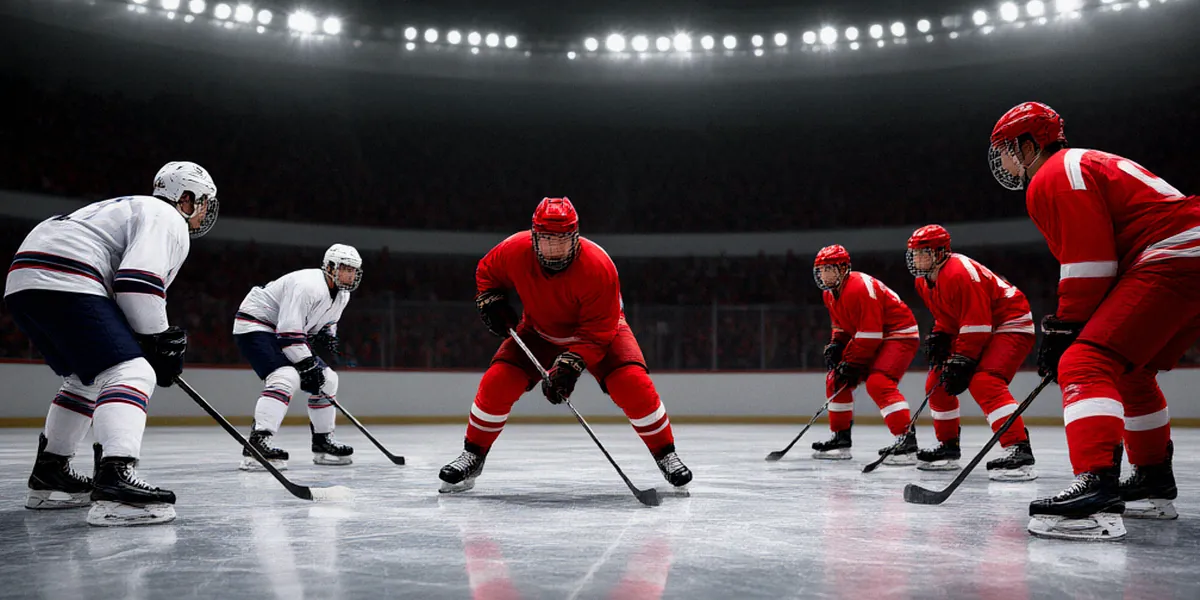
The 1979 Challenge Cup: When NHL Stars Faced the Soviet Team
Madison Square Garden was electric in February 1979. The NHL’s best had gathered in New York City to face the Soviet national team in a three-game showdown, and the stakes felt enormous. This series bridged two eras we know well — the 1972 Summit Series that changed Canadian hockey forever, and the 1980 Miracle on Ice that would stun the world a year later. For fans who grew up hearing about the Cold War on ice, the 1979 Challenge Cup is one of those moments worth revisiting. It wasn’t the Olympics, and it wasn’t the IIHF World Championship. It was something entirely new: a mid-season clash between NHL All-Stars and the Soviet Red Machine.
The Road to the 1979 Challenge Cup

To understand why the Challenge Cup happened at all, we have to look at the landscape of international hockey in the 1970s. The 1972 Summit Series had proven that Soviet hockey was every bit as dangerous as Canada’s, and the hockey world had been trying to figure out what to do with that knowledge ever since.
Aftermath of the 1972 Summit Series
The 1972 Summit Series ended with Paul Henderson’s famous goal and a narrow Canadian victory, but the eight games had shattered the assumption that NHL players were automatically superior. The Soviet national team had pushed Canada to the absolute limit. NHL owners, players, and fans walked away with a nagging question: was 1972 a fluke, or were the Soviets genuinely on par with the best the NHL could offer? That question lingered for years.
The 1976 Canada Cup and Growing Rivalry
The 1976 Canada Cup was the next major chapter. It brought together the top hockey nations in a best-on-best format, and Canada won it with a dramatic overtime goal by Darryl Sittler. But the tournament also confirmed that Soviet hockey remained elite. Czechoslovakia finished second, the Soviets third, and the margins were razor thin. By the late 1970s, the idea of another NHL-versus-Soviet showdown was gaining traction on both sides of the Cold War divide.
How the Challenge Cup Was Organized
Negotiations between NHL owners and IIHF officials were complicated. NHL owners worried about injuries to their star players mid-season, and scheduling a series in the middle of a gruelling 80-game campaign was no small feat. But the commercial appeal was obvious. Madison Square Garden offered a neutral, high-profile venue in New York City, and both sides agreed to a three-game format. The NHL wanted to prove superiority after the 1972 Summit Series, and the Soviets wanted to demonstrate that their national team program was still the best in the world.
Format and Rosters: NHL All-Stars vs. the Soviet Red Machine
The 1979 Challenge Cup was a three-game series held at Madison Square Garden in New York City. It was not part of the IIHF World Championship or the Olympics, which made it a unique exhibition-style event with real competitive stakes. Both sides brought star power.
The Three-Game Format at Madison Square Garden
Three games, all at the Garden, with the winner taking the series. There was no aggregate scoring gimmick — it was simply best of three. The NHL assembled a true All-Star roster, and the Soviets brought their national team, essentially the same core that had dominated international hockey for much of the decade.
NHL All-Star Roster: Gretzky, Lafleur, and Clarke
The NHL roster was stacked. Wayne Gretzky, then a young star with the Edmonton Oilers in the WHA (he would join the NHL the following season), was included. Guy Lafleur, the Montreal Canadiens legend in the middle of his prime, was there. Bobby Clarke, the heart and soul of the Philadelphia Flyers, brought his trademark grit. Add names like Marcel Dionne, Larry Robinson, and Gilbert Perreault, and you had one of the most talented collections of NHL players ever assembled for a single series.
Soviet Stars: Mikhailov, Kharlamov, and Tretiak
The Soviet national team countered with its own legends. Vladislav Tretiak, widely considered the greatest goaltender of his era, was in net. Boris Mikhailov, the relentless captain, led the forward group. Valeri Kharlamov, whose skill had dazzled Canadian fans in 1972, was still a force. The Soviet lineup was built on years of playing together, with systems and chemistry that no NHL All-Star squad could replicate in a short series.
Game-by-Game Breakdown: The Action on the Ice
The three games delivered everything we could have hoped for — speed, skill, physicality, and drama. Each game told a different story.
Game 1: NHL Draws First Blood
The NHL All-Stars won Game 1 by a score of 4-2. The home side came out flying, using their size and physical play to disrupt the Soviet attack. Key goals came from the NHL’s top forwards, and the defense held firm in the third period. The Garden crowd was loud, and for one night, the NHL looked like the superior league.
Game 2: Soviet Speed and Skill Shine
Game 2 was a different story. The Soviets dominated 5-4, showcasing the passing and skating that had made them so dangerous in 1972. Mikhailov and Kharlamov were relentless, and Tretiak made several key saves to hold off an NHL comeback. The loss exposed weaknesses in the NHL All-Stars’ defensive structure — they simply hadn’t played together long enough to handle the Soviet system.
Game 3: NHL’s Decisive Victory
Game 3 was a rout. The NHL won 6-0, and the scoreline reflected a complete performance. Gretzky, Lafleur, and Clarke all contributed, and the NHL’s physical play wore the Soviets down. Tretiak was pulled after allowing several goals, and the Garden crowd celebrated a decisive series win. The physicality of the series was a major talking point — some hits crossed the line, and the Soviets clearly weren’t happy with the officiating.
Why the 1979 Challenge Cup Mattered for Canadian Hockey
For Canadian fans, the 1979 Challenge Cup was more than an exhibition. It was a measuring stick, a preview of what was to come, and a reminder that the NHL-Soviet rivalry was far from over.
Impact on Future International Tournaments
The series was a precursor to the 1980 Miracle on Ice and the 1981 Canada Cup. The 1980 U.S. Olympic team’s stunning win over the Soviets at Lake Placid was built on the foundation laid by events like the Challenge Cup. And the 1981 Canada Cup brought best-on-best hockey back to the international stage, with NHL players once again facing the Soviets in a high-stakes tournament.
Legacy for Canadian NHL Stars
For players like Gretzky, Lafleur, and Clarke, the Challenge Cup was a rare chance to represent the NHL against the Soviets outside of the Olympics or World Championships. It added a new chapter to their legacies and gave Canadian fans a chance to see their heroes in a best-on-best setting.
IIHF Hall of Fame Connections
The IIHF Hall of Fame includes several participants from the 1979 Challenge Cup. Tretiak and Kharlamov are both inducted, and their performances in this series are part of why they’re remembered as all-time greats. The series itself is a footnote in their careers, but an important one.
Controversies and Criticisms
Not everyone loved the idea of a mid-season NHL-Soviet series. The event drew its share of criticism, both in Canada and abroad.
Mid-Season Timing and NHL Owner Concerns
NHL owners were nervous about their star players getting injured in a series that didn’t count in the standings. The timing — right in the middle of the 1978-79 season — was awkward, and some teams felt their playoff chances were put at risk. The NHLPA also had concerns about player safety and compensation.
Physical Play and Officiating Debates
The physicality of the series was a major talking point. Some of the hits were borderline, and the Soviets felt the officiating favoured the NHL side. The NHL players, meanwhile, argued that the Soviets were guilty of their own questionable tactics. The debate over who was the “dirtier” team became a subplot of the series.
Media Reaction in Canada and the USSR
In Canada, the series was covered extensively, with fans eager to see how the NHL would fare against the Soviets. In the USSR, the reaction was more muted — the state-controlled media downplayed the loss, framing it as a learning experience rather than a defeat. The differing narratives added another layer to the Cold War rivalry.
The Challenge Cup’s Place in Hockey History
Where does the 1979 Challenge Cup fit in the grand scheme of hockey history? It’s often overshadowed by the 1972 Summit Series and the 1980 Miracle on Ice, but it deserves its own place in the story.
Comparing to the 1972 Summit Series
The 1972 Summit Series was a cultural event, a defining moment for Canadian hockey. The 1979 Challenge Cup didn’t have that same cultural weight, but it was a crucial bridge between 1972 and 1980. It kept the NHL-Soviet rivalry alive and set the stage for future best-on-best tournaments.
Influence on Later Canada Cup Events
The 1981 Canada Cup and the 1984 and 1987 editions all built on the foundation laid by the Challenge Cup. The idea of NHL players representing their countries in a best-on-best format became more common, and the rivalry with the Soviets remained a central storyline.
Why It Still Resonates with Canadian Fans
For Canadian fans, the 1979 Challenge Cup is a reminder of a time when NHL-Soviet matchups were rare and precious. It’s a footnote in the history of the rivalry, but a fascinating one. It also set the stage for future NHL-IIHF cooperation, including the World Juniors Canada fans know and love today.
Key Takeaways
- The 1979 Challenge Cup was a three-game series between NHL All-Stars and the Soviet national team at Madison Square Garden in February 1979.
- The NHL won the series 2-1, taking Game 1 (4-2) and Game 3 (6-0), while the Soviets took Game 2 (5-4).
- The NHL roster featured Wayne Gretzky, Guy Lafleur, Bobby Clarke, Marcel Dionne, Larry Robinson, and Gilbert Perreault.
- The Soviet team was led by Vladislav Tretiak in goal, with Boris Mikhailov and Valeri Kharlamov driving the attack.
- The series served as a bridge between the 1972 Summit Series and the 1980 Miracle on Ice, and it helped pave the way for the Canada Cup era.
- Controversies included mid-season timing, injury risk for NHL owners, physical play, and disputed officiating.
FAQ
What was the 1979 Challenge Cup?
The 1979 Challenge Cup was a three-game series between NHL All-Stars and the Soviet national team, held at Madison Square Garden in New York City in February 1979. The NHL won the series 2-1.
Who played for the NHL All-Stars in the 1979 Challenge Cup?
The NHL roster included Wayne Gretzky, Guy Lafleur, Bobby Clarke, Marcel Dionne, Larry Robinson, and Gilbert Perreault, among others.
Who were the Soviet stars in the 1979 Challenge Cup?
The Soviet national team featured Vladislav Tretiak in goal, with Boris Mikhailov and Valeri Kharlamov leading the attack.
How did the 1979 Challenge Cup influence future tournaments?
The series was a precursor to the 1980 Miracle on Ice and the 1981 Canada Cup. It helped pave the way for future NHL-IIHF cooperation and best-on-best international competition.
Are any 1979 Challenge Cup participants in the IIHF Hall of Fame?
Yes. The IIHF Hall of Fame includes several participants from the 1979 Challenge Cup, including Vladislav Tretiak and Valeri Kharlamov.
While the 1979 Challenge Cup is often overshadowed by the 1972 Summit Series and the 1980 Miracle on Ice, it was a crucial moment that showcased the best of NHL and Soviet hockey and deepened the rivalry that Canadian fans cherish. It reminded us that the Cold War on ice was about more than just wins and losses — it was about pride, identity, and the never-ending question of who played the game best.




Post Comment