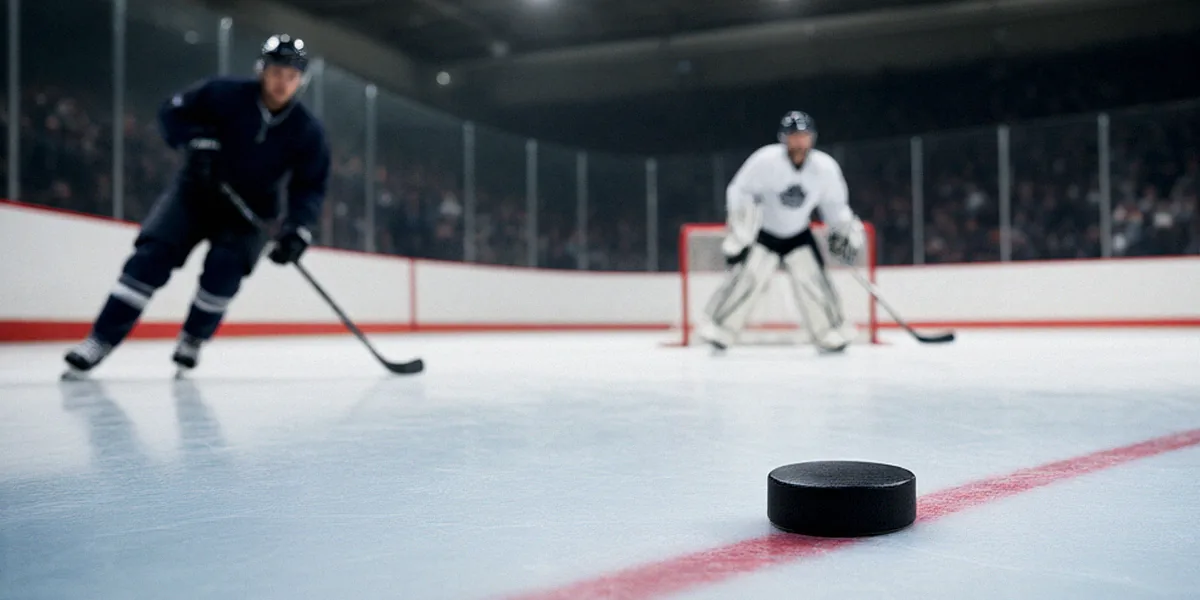
What Is Icing in Hockey? A Clear Guide for New Fans
Picture this: you’re at a Canadian Tire Centre watch party, or maybe just settled into the couch with a cold drink, watching your favourite NHL team cling to a one-goal lead. A defenceman under pressure fires the puck 180 feet down the ice. The crowd relaxes for half a second — then the whistle blows, the linesman’s arm shoots up, and the play comes all the way back. If you’ve ever turned to a friend and asked “wait, what did he do wrong?” you’re not alone. Icing is one of the most common stoppages in hockey, yet it’s also one of the most misunderstood by new fans. We’re going to break it down the way we’d explain it to a neighbour who just moved to Canada and decided to adopt the national sport.
The Basics: What Exactly Is Icing?
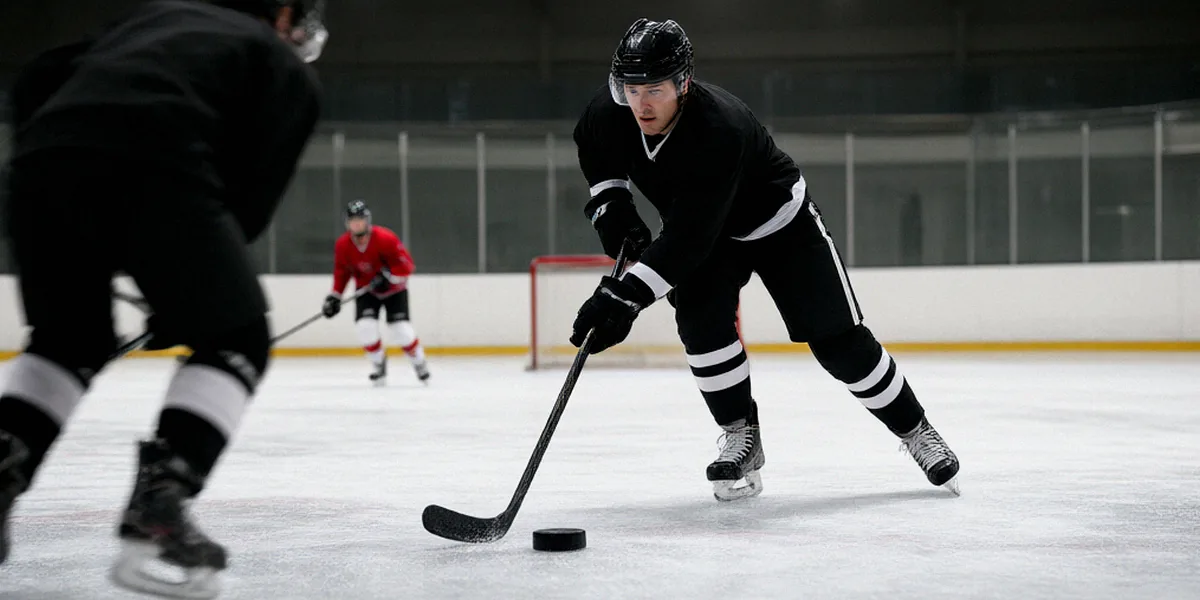
At its core, icing happens when a player shoots, bats, or deflects the puck from their own side of the centre red line all the way across the opponent’s goal line — and no teammate touches it first. When that happens, an official blows the play dead and the puck comes back for a faceoff in the offending team’s defensive zone. It’s a delay-of-game rule dressed up as a positioning rule, and it exists to stop teams from simply firing the puck away every time they feel pressure.
Here’s the catch that trips up newcomers: the NHL and the IIHF — the body that governs international play — don’t apply icing the same way. The NHL uses a hybrid system, while the IIHF uses no-touch icing in tournaments like the Olympics and the World Juniors. We’ll get into that difference shortly, because for Canadian fans who follow both the NHL and international hockey, it matters.
The Center Red Line and Goal Line
The rule hinges on two lines on the ice. The centre red line splits the rink in half. The goal line is the thin red line the net sits on, roughly 11 feet out from the end boards. For icing to be possible, the puck must be shot from behind the centre red line — meaning the shooter’s skates and stick are on their own side of it — and it must cross the opponent’s goal line. If a player shoots from in front of the centre line, no icing can be called, no matter how far the puck travels. That’s why you’ll sometimes see a defender take one stride over centre before dumping it in — they’re buying themselves immunity from the call.
What Counts as ‘Touching’ the Puck?
“Touching” is more generous than it sounds. A teammate doesn’t need to cleanly corral the puck with their stick. If it glances off a teammate’s skate, shin pad, or body before crossing the goal line, icing is waved off. Even an attempted play — a forward lunging for the puck but missing — can be enough to nullify the call under hybrid rules, depending on who the official judges would reach it first. The puck also has to actually cross the goal line; a puck that dies in the corner or hits the end boards short of the line isn’t icing.
Why Does Icing Exist? A Short History
Icing isn’t a rule that fell out of the sky. It was invented to solve a specific problem, and the problem was boring hockey. Without an icing rule, a team protecting a lead could simply fire the puck the length of the rink over and over, forcing the opposition to skate back 200 feet to retrieve it. That’s not hockey — that’s keep-away with extra steps.
The 1937 NHL Rule Change
The NHL introduced icing in 1937, and it changed the sport permanently. Before that season, teams could dump the puck at will with no consequence, and late-game leads were often protected by pure stalling. The new rule forced teams to actually move the puck with purpose. It’s one of the earliest examples of the league tweaking its rulebook to protect the entertainment value of the game — a tradition that continues today with hybrid icing and other modern adjustments.
Icing in the 1972 Summit Series
If you want a crash course in how rules differ across borders, look no further than the 1972 Summit Series. The eight-game showdown between Canada and the Soviet Union was played under IIHF-influenced international rules in Moscow, and the differences from NHL hockey — including how icing and other stoppages were handled — became a running storyline. Canadian players, raised on NHL rules, had to adapt on the fly to a game officiated under a different rulebook, and the adjustment period was real. The series remains the most famous example of why understanding international rule variations matters for anyone who follows Canadian hockey beyond the NHL.
How Icing Is Called: NHL vs. IIHF Rules
This is where things get interesting for Canadian fans, because depending on what you’re watching in a given week, you might see two completely different icing systems in action.
Hybrid Icing in the NHL
The NHL adopted hybrid icing in 2013, replacing the old race-to-the-puck system that had produced some terrifying collisions. Under hybrid icing, the linesman makes a judgment call at the faceoff dots: if the defending player is judged to be able to reach the puck first, the race continues and the icing is waved off. If the attacking player has the better line, the whistle blows immediately and the puck is iced. The result is fewer high-speed crashes into the end boards and a faster, safer game. It’s one of the more successful rule changes in modern NHL history.
No-Touch Icing in IIHF Play
International hockey takes a simpler approach. Under IIHF rules, icing is automatic the moment the puck crosses the goal line — no race, no judgment call, no contact needed. This is the system you’ll see at the Olympics, at the IIHF World Championship, and at the World Juniors Canada fans tune into every December. For players, it means no dangerous sprints. For fans, it means the whistle comes faster and play resets more predictably. If you’ve ever watched a World Juniors game and thought “why did they blow that down so quickly?” — that’s no-touch icing at work.
What Happens After an Icing Call?
Once icing is called, the puck comes back for a faceoff in the offending team’s defensive zone. That’s the punishment: you don’t get to escape pressure by dumping the puck, and now you have to win a draw 15 feet from your own net.
Faceoff Location and Line Changes
Here’s the part that really stings: the team that iced the puck is not allowed to change lines before the faceoff. The offending unit has to stay on the ice, tired legs and all, while the other team is free to send out fresh skaters. In a sport where shifts last 45 seconds and fatigue decides games, that’s a massive penalty in disguise.
Strategic Impact on the Game
Coaches build entire systems around avoiding icings. A tired defence pairing hemmed in its own zone will sometimes eat a hit rather than flip the puck out and risk the whistle. Conversely, smart teams will pressure hard on the forecheck knowing the opposition is one bad clear away from a defensive-zone draw with no line change. It’s a small rule with big strategic consequences, and once you notice it, you’ll see it shaping plays all over the ice.
Exceptions: When Icing Is Waived Off
Icing isn’t automatic. There are several situations where officials will let play continue, and knowing them makes you a sharper viewer.
- Shorthanded teams: A team killing a penalty can ice the puck freely. This is a deliberate rule — it gives the penalized team a fighting chance and prevents power plays from becoming shooting galleries.
- Touch by the opposing team: If the defending team touches the puck first, icing is nullified. That includes a goalie wandering out to play it behind the net.
- Referee’s discretion: Under hybrid icing, if the official judges the defending team could have played the puck but chose not to, the call can be waved off. This is a judgment call, and it’s a frequent source of debate among fans.
- Puck crosses the goal line on a shot: If the puck enters the net, it’s a goal — not an icing. Officials also waive off icing if the puck was deflected by an opponent before crossing the line.
These exceptions are a big part of why NHL rules explained in plain language still require a bit of nuance. The rulebook is one thing; the way officials apply it in real time is another.
Shorthanded Icing
When you’re down a man, you can fire the puck down the ice with zero consequence. This is why penalty kills often feature long, high clears — it’s not lazy hockey, it’s the rulebook working in the killers’ favour. It also means a shorthanded team can drain clock without risking a defensive-zone draw.
Touch by Opposing Team
If a defender or goalie gets a piece of the puck before it crosses the goal line, no icing. This is why you’ll see defencemen sprint back and dive to tap the puck — it’s not just about possession, it’s about killing the whistle and keeping play alive.
Referee’s Discretion
Hybrid icing gives officials room to judge intent and reachability. If the defending player had a clear path to the puck and simply didn’t pursue it, the linesman can wave off the icing. It’s a rule designed to reward hustle and punish passive play, and it’s one of the reasons the hybrid system has been widely praised since 2013.
Icing in Context: Memorable Moments and Canadian Hockey
Icing has shaped some of the biggest moments in Canadian hockey history, and not always quietly.
1972 Summit Series Icing Controversy
During the 1972 Summit Series, the clash between NHL habits and international officiating produced no shortage of confusion. Canadian players, accustomed to NHL interpretations, had to recalibrate how they managed the puck and how they read stoppages under a different rulebook. The series became a case study in how rule variations can swing momentum in a short tournament — and it’s still referenced today whenever Canada meets Russia or any European side in best-on-best play.
World Juniors Canada and Icing Calls
Every December, Canadian fans get a front-row seat to IIHF no-touch icing at the World Juniors. The faster whistles and automatic calls can frustrate viewers used to NHL hybrid rules, especially when a promising forecheck gets erased by a quick whistle. But the no-touch system also protects teenage players from dangerous races into the boards, which is a trade-off most of us are happy to accept. Watching Canada navigate that rulebook is part of what makes the tournament such a distinct brand of hockey.
And if you follow the careers of the players who excel at puck management under these rules, you’ll often find them enshrined in the IIHF Hall of Fame — a reminder that the smartest players in the game are the ones who understand the rulebook as well as they understand the puck.
Frequently Asked Questions About Icing
Can a goalie ice the puck?
Yes. If a goalie shoots or clears the puck from behind the centre red line and it crosses the opponent’s goal line untouched, icing is called just as it would be for any skater. Goalies are not exempt from the rule.
Is icing different in the playoffs?
No. The icing rule is identical in the regular season and the Stanley Cup Playoffs. The stakes change, but the mechanics don’t — though the strategic weight of a tired unit stuck on the ice for a defensive-zone draw feels heavier in a Game 7.
What’s the difference between icing and offside?
They’re completely separate rules. Icing is about where the puck is shot from and where it crosses the goal line. Offside is about player positioning at the blue line — attacking players can’t enter the offensive zone before the puck. Both cause stoppages, but for different reasons.
Why doesn’t the NHL use no-touch icing like the IIHF?
The NHL prefers hybrid icing because it keeps races in the game while reducing the most dangerous collisions. No-touch icing is safer and faster, but it removes the pursuit element that many fans enjoy. Both systems have trade-offs, and the NHL has stuck with hybrid since 2013.
Does icing count as a penalty?
No. Icing is a stoppage, not a penalty. No one goes to the penalty box. The only consequences are the defensive-zone faceoff and the inability to change lines.
Understanding icing does more than help you follow the whistle — it unlocks a layer of strategy that makes Canadian hockey more fun to watch. From the NHL’s hybrid system introduced in 2013 to the no-touch rules that define the World Juniors Canada experience every winter, icing is a small rule with a long history and a real impact on how the game is played. The next time you hear that whistle after a long clear, you’ll know exactly what happened, why it happened, and what it means for the shift ahead.



Post Comment