
1976 Canada Cup: Rosters and Results
The 1976 Canada Cup was the first true best-on-best international hockey tournament ever staged, and it delivered everything fans could have hoped for. For the first time, NHL superstars and Soviet legends met in a single competition with full national rosters, not watered-down amateur squads. When Canada and Czechoslovakia traded blows in a dramatic overtime final, the tournament cemented itself as a turning point in hockey history and set the stage for the Canada-Soviet rivalry that would define the next two decades.
Tournament Format and Participating Teams
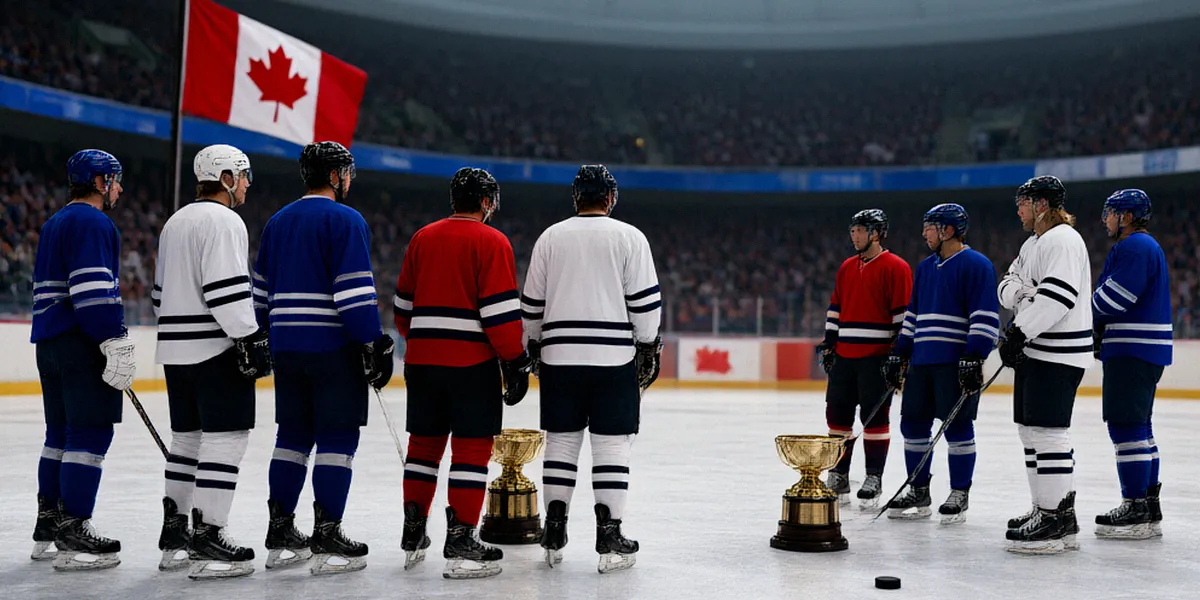
Six hockey nations accepted invitations to the inaugural Canada Cup: Canada, Czechoslovakia, Finland, Sweden, the Soviet Union, and the United States. The event was organized by Hockey Canada and ran from September 2 to September 15, 1976, placing it squarely before the NHL regular season so that every country could ice its strongest possible lineup. That single decision changed everything — for the first time, fans in North America and Europe could watch the game’s genuine elite face off in meaningful games.
Round-Robin Structure and Points System
The format was straightforward but unforgiving. Each team played every other team once in a single round-robin, earning two points for a win, one for a tie, and nothing for a loss. The top two teams in the standings advanced directly to the final, while the remaining four were eliminated. Ties in the standings were broken by goal differential, which put a premium on running up the score when the opportunity arose.
Venues in Canada and the United States
Games were spread across four cities that reflected the tournament’s cross-border ambition:
- Ottawa — Civic Centre
- Toronto — Maple Leaf Gardens
- Montreal — The Forum
- Philadelphia — The Spectrum
Philadelphia’s inclusion was notable because it gave the tournament an American footprint and exposed U.S. fans to international hockey at its highest level. The Montreal Forum hosted the final, a fitting stage given its status as the cathedral of the sport.
Team Rosters: Canada and the Soviet Union
The two favourites arrived with rosters that read like a who’s who of hockey. Canada’s lineup was drawn entirely from the NHL, while the Soviet Union brought its famed national team core that had dominated Olympic and World Championship play for more than a decade.
Canada’s NHL All-Stars
Canada’s roster was headlined by Bobby Orr, who delivered an MVP performance despite playing on knees that were already breaking down. Phil Esposito anchored the offence, Guy Lafleur brought speed and finishing on the wing, and the lineup also featured Marcel Dionne, Bobby Clarke, Gilbert Perreault, and Serge Savard. The depth was staggering — Canada could roll three scoring lines and still leave stars in the press box.
Soviet Union’s Red Machine
The Soviet roster was built around Valeri Kharlamov, whose creativity and acceleration made him one of the most feared forwards in the world. Vladislav Tretiak manned the crease and delivered standout goaltending throughout the tournament, keeping the Soviets in every game. Boris Mikhailov, Vladimir Petrov, and Alexander Maltsev rounded out an attack that had been drilled for years under coach Viktor Tikhonov’s disciplined system.
Other Notable Rosters: Czechoslovakia, Sweden, Finland, USA
Beyond the two giants, the tournament showcased talent from across the hockey world. Czechoslovakia arrived as the reigning World Championship power, Sweden brought NHL reinforcements, and Finland and the United States fielded young squads eager to prove they belonged.
Czechoslovakia’s Offensive Threats
Czechoslovakia’s attack was led by Vaclav Nedomansky, a powerful centre who would soon jump to the NHL. He was supported by Ivan Hlinka, Vladimir Martinec, and Milan Novy, giving the Czechs a forward group capable of matching anyone on a given night. Their round-robin win over the Soviets proved they were not merely making up the numbers.
Sweden’s NHL Reinforcements
Sweden leaned heavily on Borje Salming, who was already establishing himself as one of the NHL’s best defencemen with the Toronto Maple Leafs. Salming’s presence gave the Swedes a legitimate two-way anchor, and players like Anders Hedberg and Ulf Nilsson added offensive punch from the professional ranks.
Finland and USA: Underdogs with Upset Potential
Finland’s roster featured Matti Hagman, one of the first Finnish-trained players to make an NHL impact. The Americans iced a young, college-influenced squad that lacked star power but played with energy. Neither team seriously threatened the medal picture, but their participation gave the tournament genuine global reach.
Round-Robin Results and Standings
The round-robin produced its share of blowouts and one unforgettable classic. Canada opened with a 6-0 win over Finland, signalling that the host nation meant business. The Soviets, meanwhile, rolled through most of their schedule before colliding with Canada in a game that instantly entered hockey lore.
Canada vs. Soviet Union: The Round-Robin Classic
The Soviet Union beat Canada 5-3 in their round-robin meeting, handing the hosts their only loss of the tournament. Kharlamov and company exposed gaps in Canada’s defensive coverage, while Tretiak turned aside wave after wave of Canadian pressure. The loss stung, but it also set up the possibility of a rematch — and it deepened the Canada-Soviet rivalry that had exploded during the 1972 Summit Series.
Surprising Results and Standout Performances
Czechoslovakia’s victory over the Soviet Union scrambled the standings and reminded everyone that the tournament was not a two-team show. Canada finished the round-robin atop the table, with the Soviets close behind, setting up a final between Canada and Czechoslovakia after the Czechs edged out the Soviets on goal differential. Bobby Orr’s steadying presence on the Canadian blue line was a recurring theme throughout the round-robin.
The Final: Canada vs. Czechoslovakia
The final at the Montreal Forum delivered the drama the tournament deserved. Canada jumped out to a lead, Czechoslovakia clawed back, and the game spilled into overtime tied 4-4. What followed became one of the most celebrated moments in Canadian hockey history.
Semifinal Showdown: Canada vs. Czechoslovakia
In the semifinal, Canada faced Czechoslovakia in a tense, physical affair that required Canada to dig deep. The Czechs pressed hard and forced Canada to defend leads rather than chase them, a role reversal from the round-robin. Canada survived, advancing to the final with a hard-earned win that showcased the team’s resilience.
Overtime Heroics in the Final
In the final, Canada’s 5-4 overtime victory over Czechoslovakia was sealed by Darryl Sittler, who pounced on a loose puck and buried the winner to send the Montreal Forum into chaos. The goal capped a tournament in which Canada’s stars answered every challenge, and it gave the Canada Cup a signature moment that fans still talk about decades later.
Legacy and Impact on Hockey History
The 1976 Canada Cup changed how the hockey world thought about international competition. It proved that best-on-best tournaments could draw massive audiences, produce unforgettable hockey, and settle arguments about which nation truly had the best players.
Influence on Future Canada Cups and World Juniors
The success of 1976 led directly to subsequent Canada Cups in 1981, 1984, 1987, and 1991, and it influenced the creation and growth of the World Juniors as a marquee holiday event. The template — full national rosters, a compact round-robin, and a dramatic final — became the standard for international hockey.
Statistical Highlights and NHL Records
Several players used the Canada Cup as a springboard into NHL record books. Orr’s MVP performance underscored his status as the game’s best player, while Tretiak’s showing reinforced his reputation as the finest goaltender outside the NHL. The tournament also gave NHL scouts a long look at European talent, accelerating the flow of players like Salming, Nedomansky, and Hagman into the league.
The 1976 Canada Cup remains a cornerstone of hockey history. It was the first tournament to truly gather the world’s best players in one place, it produced a classic final decided by Darryl Sittler’s overtime goal, and it deepened the Canada-Soviet rivalry that would dominate the sport for years. For anyone studying hockey history, the 1976 Canada Cup is essential — a tournament that set the standard for everything that followed.
FAQ
Who won the 1976 Canada Cup?
Canada won the 1976 Canada Cup, defeating Czechoslovakia 5-4 in overtime in the final at the Montreal Forum.
Who scored the overtime winner in the 1976 Canada Cup final?
Darryl Sittler scored the overtime winner for Canada, sealing the 5-4 victory over Czechoslovakia.
Which cities hosted 1976 Canada Cup games?
Games were played in Ottawa, Toronto, Montreal, and Philadelphia.
Who was named MVP of the 1976 Canada Cup?
Bobby Orr of Canada was named tournament MVP after a dominant performance on defence.
How did the Soviet Union fare in the 1976 Canada Cup?
The Soviet Union, led by Valeri Kharlamov and goaltender Vladislav Tretiak, beat Canada 5-3 in the round-robin but finished behind Canada and Czechoslovakia in the standings and missed the final.

Post Comment