
Russian Captains in the NHL: A Historical Rundown
For a league that has welcomed Russian talent since the late 1980s, the NHL has handed out the captain’s ‘C’ to a surprisingly small number of Russian-born players. We find that odd, given how many Russian stars have defined entire franchises. The list is short, but the names on it carry real weight — from the first pioneer in Chicago to the longest-serving captain in Washington Capitals history. Let’s walk through the full story, because it says as much about hockey culture as it does about the players themselves.
The Pioneers: Early Russian Captains in the NHL
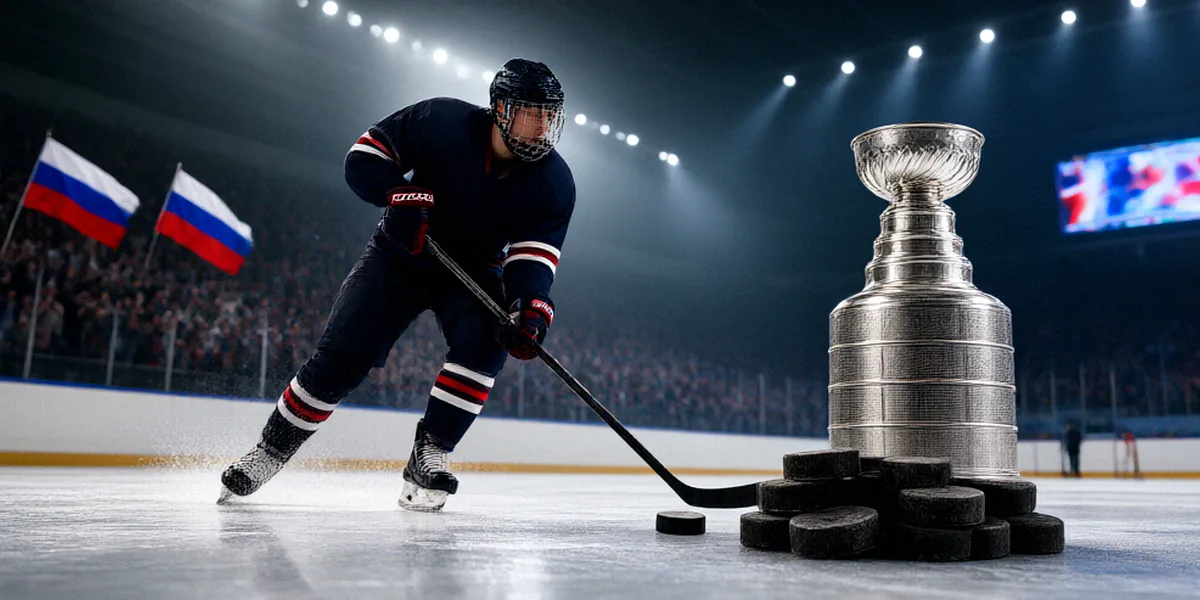
The door for Russian players opened gradually. The 1972 Summit Series showcased Soviet hockey talent to a North American audience and changed how the NHL viewed players from behind the Iron Curtain. Two decades later, the first Russians were finally handed leadership roles — and it happened in two very different hockey markets.
Alexei Zhamnov: Leading the Blackhawks
Alexei Zhamnov was the first Russian-born captain in NHL history with the Chicago Blackhawks. He wore the ‘C’ during the 1990s, a period when Chicago was transitioning from its early-90s contending core. Zhamnov was a skilled two-way centre with excellent vision, and his captaincy signalled that an organization steeped in old-school tradition was willing to look east for leadership. For a generation of Russian players coming over after the Summit Series era, that mattered.
Alexei Yashin: Captaincy in Ottawa
Alexei Yashin took the captaincy in Ottawa, becoming one of the youngest captains in Senators history. His tenure was complicated — contract disputes and a messy exit coloured how Canadian fans remember him — but the raw fact remains: a Russian centre was entrusted with leading a Canadian franchise through its early playoff years. Whatever the ending, it was a milestone for Russian players in the league.
The Golden Era: Russian Captains in the 2000s
The 2000s brought a wave of Russian stars who had grown up watching the Summit Series generation and arrived in the NHL with both skill and personality. Two of them wore the ‘C’ in markets where hockey is treated as a religion.
Sergei Fedorov: A Capital Leader
Sergei Fedorov captained the Washington Capitals in the late 2000s, adding a leadership chapter to a résumé that already included three Stanley Cups with the Detroit Red Wings. Fedorov’s career bridged the Soviet system and the modern NHL — he was one of the first Russian players to defect-era transition successfully and sustain elite play for two decades. His captaincy in Washington was short, but it reinforced that Russian veterans could anchor a room.
Alex Kovalev: Captaining the Canadiens
Alex Kovalev captained the Montreal Canadiens, one of the most storied Canadian franchises in the league. That’s a big deal. Montreal fans are demanding, the media scrutiny is relentless, and the captaincy there is treated as a public trust. Kovalev handled it with flair, producing highlight-reel shifts and becoming a fan favourite despite the pressure. His time with the ‘C’ remains one of the clearest examples of Russian impact in Canada.
Modern Russian Captains: The Current Wave
Today, Russian captains are still rare — but the ones who hold the role hold it for a long time.
Alexander Ovechkin: The Capitals’ Franchise Leader
Alexander Ovechkin has been captain of the Washington Capitals since 2010. That’s over a decade of leading the same franchise, through rebuilds, playoff heartbreaks, and eventually a Stanley Cup in 2018. He’s also chasing NHL records that once seemed untouchable, climbing the all-time goals list with a shot that has aged remarkably well. In our view, Ovechkin’s captaincy is the single most important development in the history of Russian NHL leadership — it normalizes the idea entirely.
Evgeni Malkin: A Penguin for Life
Evgeni Malkin has spent his entire NHL career with the Pittsburgh Penguins, serving as an alternate captain behind Sidney Crosby. He hasn’t worn the ‘C’ — Crosby has held it since 2007 — but Malkin’s leadership inside the room is well documented. Three Stanley Cups, a Hart Trophy, a Conn Smythe, and a place among the greatest Penguins ever. If Crosby hadn’t been there, Malkin would almost certainly have captained Pittsburgh.
Why So Few Russian Captains?
We get asked this a lot. The short answer is that captaincy in the NHL is about more than talent — it’s about communication, media obligations, and cultural fit with a mostly North American room.
Language and Cultural Adjustments
Language barriers have historically played a role. Captains are expected to speak to officials, handle press scrums, and mediate in the room. For players who arrived with limited English, that burden could be overwhelming. Add in a different hockey upbringing — the Soviet system emphasized collective structure over individual leadership roles — and the adjustment took time.
NHL Teams’ Leadership Preferences
Teams have also leaned toward North American captains out of habit. GMs and coaches often default to players who grew up in the CHL or NCAA systems, assuming they understand the market and the media landscape. That preference is fading, but it explains a lot of the historical gap. The World Juniors frequently feature Russian captains who later assume NHL leadership roles, which suggests the pipeline exists — teams just haven’t always used it.
Some of the factors we see most often:
- Language and media obligations in English-speaking markets
- Cultural differences in how leadership is expressed in the room
- Front offices defaulting to North American developmental backgrounds
- Shorter tenures for Russian players in some markets due to trade and contract churn
- Perception — fair or not — that European captains are less vocal
The Future of Russian Captains in the NHL
The trend line is moving. Younger Russian stars arrive more comfortable with English, more familiar with North American media, and more willing to take on the public side of the role.
Kirill Kaprizov: Next in Line?
Kirill Kaprizov is the face of the Minnesota Wild and their most dynamic offensive player since Marian Gaborik. If he stays long-term — and his contract suggests he will — a captaincy is entirely plausible. He already carries the franchise on the ice; the question is whether the Wild want to formalize it.
Igor Shesterkin: A Goalie Captain?
Igor Shesterkin is a longer shot, but goalies can be captains in theory (the role just can’t include on-ice conversations with officials in most interpretations). Shesterkin is the backbone of the New York Rangers and one of the best netminders in the world. We wouldn’t bet on a goalie captaincy happening, but if any Russian goalie were to get that kind of recognition, he’d be the one.
FAQ
Who was the first Russian-born captain in NHL history?
Alexei Zhamnov, who captained the Chicago Blackhawks in the 1990s. He was the first Russian-born player to wear the ‘C’ in the league.
How long has Alexander Ovechkin been captain of the Washington Capitals?
Since 2010. He’s the longest-tenured captain in franchise history and led the Capitals to the Stanley Cup in 2018.
Did Alex Kovalev really captain the Montreal Canadiens?
Yes. Kovalev wore the ‘C’ for the Canadiens, making him one of the few Russian captains of a major Canadian franchise. His skill and personality made him a fan favourite in Montreal.
Why are there so few Russian captains in the NHL?
A mix of language barriers, cultural adjustments, and front-office preferences for North American leaders. The 1972 Summit Series opened the door for Russian players, but leadership roles took decades longer to follow.
Could Kirill Kaprizov or Igor Shesterkin become captains?
Kaprizov is the more likely candidate given his role as the Wild’s franchise player. Shesterkin’s position as a goalie makes a captaincy unlikely, though he’s unquestionably a leader on the Rangers.
Russian captains remain rare in the NHL, but the arc is clear. From Zhamnov’s pioneering ‘C’ in Chicago to Ovechkin’s long reign in Washington, the role has slowly become more accessible to Russian-born players. That shift reflects the NHL’s growing diversity and the enduring legacy of Soviet hockey — a system that produced leaders long before the league was ready to name them.


Post Comment