What Is Icing in Hockey? The Rule Explained
We still remember the roar turning into a confused murmur at Luzhniki in 1972 — a Soviet clearing attempt sailed the length of the ice, the crowd waited for the whistle, and nothing came. The play continued, the Canadians scrambled, and half the arena had no idea why. Icing looks like the simplest rule in hockey, yet it decides games, shapes strategy, and even protects careers. So do we really understand it? Let’s fix that.
The Basics: What Icing Actually Means
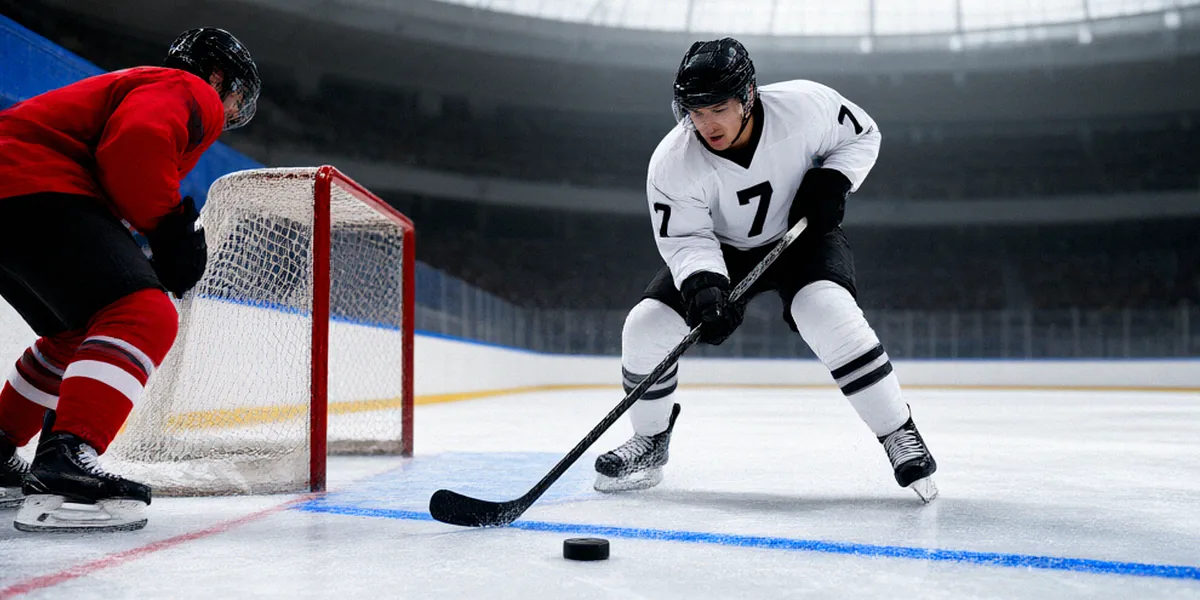
Icing is called when a player shoots the puck from behind the center red line all the way across the opponent’s goal line without anyone touching it along the way. The result is a stoppage: the puck comes back for a faceoff in the offending team’s defensive zone. The key thing to understand is that intent doesn’t matter. A player can be trying to clear the zone, spring a breakaway, or just dump the puck in — if the puck crosses the goal line untouched from behind the red line, it’s icing.
It’s a rule about position and outcome, not about what a player was thinking. That’s why you’ll sometimes see a player win a race to the puck, only to have the linesman wave the play dead anyway because the puck got there first, untouched.
The Center Red Line: The Key Boundary
The center red line is the dividing line — literally. If the puck is shot from on or behind that line and crosses the opponent’s goal line, icing is in play. If it’s shot from in front of the red line, no icing can be called, no matter how far the puck travels. This is why you’ll see defenders step just over the red line before firing the puck down the ice on a penalty kill: position is everything.
What Happens After Icing Is Called
The whistle blows, the play stops, and the faceoff comes back to the defensive zone of the team that iced the puck. In the NHL, that team also can’t change lines before the faceoff, which is a big deal late in a shift. The tired group stays on the ice, the opposing coach gets to send out fresh legs, and suddenly an innocent-looking clear becomes a defensive-zone trap. That line-change restriction is one of the quiet reasons icing rules matter so much tactically.
Why Icing Exists: A Quick History Lesson
Before 1937, there was nothing stopping a team from firing the puck 200 feet down the ice every time it got into trouble. There was no shot clock, no delay-of-game penalty for it — just a long skate and a faceoff. Games dragged, and teams protecting a lead turned the third period into a puck-launching contest. The NHL needed a fix.
The 1937 NHL Rule Change
In 1937, the NHL introduced icing as we’d recognize it today: shoot the puck from behind the center red line across the opponent’s goal line, and the whistle stops play. The Montreal Canadiens and Toronto Maple Leafs, the league’s flagship franchises of the era, were among the first teams to build their systems around the new rule — both as beneficiaries when opponents iced the puck and as teams that had to adjust their own clearing strategies. The rule changed what “safe hockey” looked like overnight.
How Icing Changed Strategy in the Original Six Era
In the Original Six era, with only six teams and rosters that barely changed, coaches quickly learned that icing was a weapon in both directions. Dumping the puck became a legitimate forechecking tool rather than pure time-wasting, and defenders had to think twice before blindly clearing. The rule also made conditioning matter more: if you iced the puck, you couldn’t change, and in a six-team league where everyone knew everyone, a tired shift was an invitation to get scored on.
Types of Icing: Standard, Hybrid, and No-Touch
Not all icing is created equal. Depending on the league and the era, you’ll see three distinct versions of the rule — and the differences can decide whether a play is dead or a goal is scored.
Standard Icing: The Classic Race
In standard icing, the race is on. Once the puck is shot from behind the red line, both teams sprint after it. If the defending team’s player reaches the puck first — or if the puck crosses the goal line and the defending team touches it first — icing is called. If the attacking team gets there first, play continues. This is the version many of us grew up watching, and it produced some spectacular, lung-burning footraces.
Hybrid Icing: Safety First
Hybrid icing was adopted by the NHL in 2013 after Joni Pitkänen suffered a serious injury in a race to an iced puck. Under hybrid icing, the linesman makes the call based on who would win the race when the puck crosses the faceoff dots in the end zone. If the defending player is ahead, icing is called immediately — no full-speed race into the boards. If the attacking player is ahead, play continues. It’s a judgment call, and it’s designed to keep players off the end boards at full speed.
No-Touch Icing: Used in International Play
No-touch icing is the simplest version: the moment the puck crosses the goal line, the whistle blows. No race, no judgment, no contact. It’s been used in international competition and was adopted by the IIHF for its world championship and Olympic tournaments. It removes the dangerous race entirely, at the cost of some dramatic finishes.
When Icing Is Waived Off: Exceptions and Nuances
Icing isn’t automatic. There’s a list of situations where the linesman will wave it off, and knowing them is where casual fans become real students of the game.
- Shorthanded teams can ice the puck freely. If you’re killing a penalty, you can dump the puck down the ice with no consequence.
- If the puck touches a defender, icing is waived. A deflection off a stick or skate kills the call.
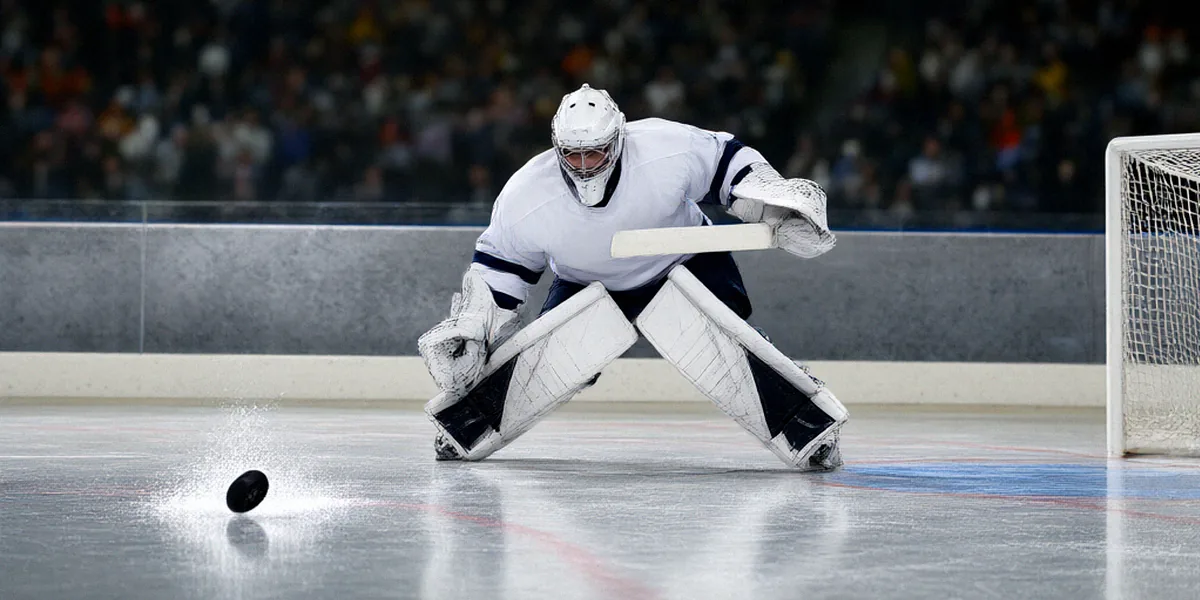
- If the goalie plays the puck, icing is waived. Once the netminder leaves the crease or touches it, the play stays live.
- If the puck crosses the goal line but the attacking team would have won the race, hybrid rules keep it live.
Shorthanded Icing: The Penalty Kill Exception
This is the one that shapes entire games. A team on the penalty kill can fire the puck the length of the ice as often as it wants — no whistle, no defensive-zone faceoff. It’s a pressure valve, and it’s why good penalty-killing units practice long clears. It’s also why power plays sometimes look passive: the puck keeps leaving the zone, and the man advantage has to regroup.
Deflection or Touch by Opponent
If a defender gets a piece of the puck — even a glancing deflection off a shin pad — the icing is waived. This is why you’ll see defenders stretch out a stick or a skate at the last second on a hard clear. They’re not trying to control the puck; they’re trying to kill the call.
Goalie Interference and Other Waivers
If the goaltender plays the puck outside the crease, or if the puck hits a player in the neutral zone, the icing is waived. The logic is simple: once the defending team has a chance to play the puck and chooses not to, or once the puck is touched, the “untouched clear” condition no longer applies. During the 1972 Summit Series, Soviet teams were famously sharp about these nuances — they understood exactly when a clear would be waived and when it wouldn’t, and they used that knowledge to control pace in a way Canadian players weren’t used to.
Icing in International Play: IIHF vs. NHL Rules
If you watch the World Juniors every December, you’ve probably noticed that icing calls feel different from what you see in the NHL. That’s not your imagination — it’s the rulebook.
IIHF No-Touch Icing: How It Works
The IIHF adopted no-touch icing, meaning the whistle blows the instant the puck crosses the goal line, with no race and no linesman’s judgment. It’s safer, it’s simpler, and it changes how teams defend a lead. There’s no chance of a dramatic footrace to kill a call, but there’s also no chance of a career-altering collision into the end boards.
World Juniors: Where Canadians See the Difference
The World Juniors is where most Canadian fans get their annual dose of IIHF rules — no-touch icing, different penalty standards, and a bigger ice surface. Players who grew up on hybrid icing have to adjust fast, because in international play, a hard clear from behind the red line is dead the moment it crosses the goal line. No race, no second chance.
Soviet Hockey’s Approach to Icing
Soviet teams in the 1970s and 80s built their game around puck possession and controlled exits, so no-touch icing suited them. They rarely dumped the puck blindly, and when they did clear it, they did so with purpose — knowing the whistle would come immediately and they could set up their forecheck. It was a small rule detail that fit a larger philosophy: control the puck, control the game.
Famous Icing Moments in Hockey History
Icing calls rarely make highlight reels, but they’ve shaped some of the biggest games ever played.
The 1972 Summit Series: Icing Under Pressure
In the 1972 Summit Series, the difference between Canadian and Soviet approaches to clearing the puck was on full display. Canada’s NHL players were used to racing out icing calls and using the red line as a tactical boundary; the Soviets were precise about when a clear would be waived. In Game 8, with everything on the line, every cleared puck and every faceoff mattered — and the small rule details added up over 60 minutes.
NHL Records: Most Icing Calls in a Game
In the dead-puck era of the 1990s, the New Jersey Devils turned defensive hockey into an art form, and their trap-heavy system produced some of the highest icing counts in NHL history. Games with 20-plus icings became common when a team was protecting a one-goal lead, and the rule’s line-change restriction made those minutes grind. It’s a reminder that icing isn’t just a rule — it’s a strategic lever.
FAQ
Can you ice the puck on the penalty kill?
Yes. A shorthanded team can shoot the puck from behind its own red line across the opponent’s goal line without an icing call. It’s one of the biggest advantages of being on the penalty kill, and it’s why long clears are a core part of penalty-killing strategy.
What’s the difference between hybrid icing and no-touch icing?
Hybrid icing, used in the NHL since 2013, lets the linesman decide based on who would win the race when the puck crosses the faceoff dots — if the defender is ahead, icing is called. No-touch icing, used by the IIHF, blows the whistle the instant the puck crosses the goal line, with no race at all.
Why was hybrid icing introduced?
The NHL adopted hybrid icing in 2013 after Joni Pitkänen suffered a serious injury in a race to an iced puck. The rule is designed to eliminate full-speed collisions into the end boards while keeping the spirit of the race.
Does the puck have to be touched for icing to be called?
Under standard and hybrid rules, yes — the puck must cross the goal line untouched by the defending team. If a defender deflects it, or the goalie plays it, the icing is waived. Under IIHF no-touch rules, the whistle comes as soon as the puck crosses the line.
Did icing exist during the 1972 Summit Series?
Yes, but the rules differed between NHL and international play. The 1972 Summit Series was played under a mix of NHL and international rules, and the nuances of when icing was waived became a real tactical factor — especially for the Soviet team, which understood those details extremely well.
Icing looks like the simplest call in hockey, but it touches everything: strategy, safety, line changes, and the way entire eras of the game were played. From the 1937 rule change that reshaped the Original Six, through the Summit Series and the World Juniors, to hybrid icing in today’s NHL, the rule keeps evolving — and understanding it makes every clear, every race, and every whistle a little richer. That’s the kind of detail that deepens our appreciation for the Canadian game.


Post Comment