
Average NHL Player Height and Weight Over Time: How the Game Got Bigger
Picture two hockey players standing side by side. The first is Gordie Howe in 1955 — 6’0″ and 205 lbs, a wrecking ball on skates who was considered one of the biggest men in the league. The second is a modern depth forward you’ve never heard of, and he’s also roughly 6’1″ and 200 lbs — except today he’s just average. That gap tells the story of nearly 80 years of NHL evolution. The game didn’t just get faster and more skilled; it got measurably bigger. We dug into the numbers to trace how average NHL player height and weight changed era by era, from the Original Six through the Summit Series, the big-body 1990s, and into today’s speed-and-skill game.
The Original Six Era: Smaller, Leaner Players
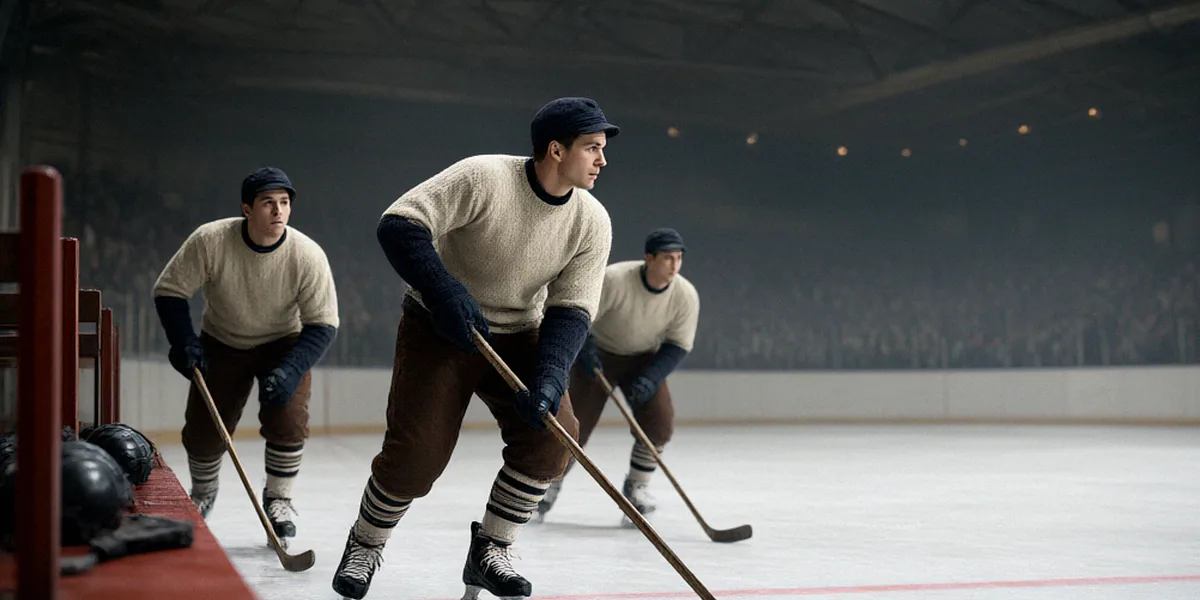
From the 1940s through the 1967 expansion, the NHL was a six-team league with a shallow talent pool by modern standards — but also a very different physical profile. Rosters were stocked with players who often weighed under 180 pounds. A 5’9″, 170-lb winger was completely normal. When Gordie Howe arrived with the Detroit Red Wings, his 6’0″, 205-lb frame was genuinely above average for the 1950s, and that size helped define his punishing, legendary career.
Height and Weight Averages in the 1950s
We don’t have perfect game-by-game measurements from the era, but team programs, media guides, and historical rosters give us a reliable picture. In the 1950s, the average NHL player stood roughly 5’10” to 5’11” and weighed somewhere in the 170–185 lb range. Anything over 200 lbs was notable. Howe at 205 lbs was an outlier, and Maurice “Rocket” Richard, one of the most feared scorers of the era, played at around 5’10” and 180 lbs.
Why Players Were Smaller: Training, Nutrition, and Style of Play
Several forces kept players lean:
- Off-season jobs: Most players worked summer jobs and trained informally, if at all. There was no year-round strength program.
- Nutrition: Sports nutrition didn’t exist. Steak, potatoes, and cigarettes were not unusual pre-game fare.
- Style of play: The game was slower, with longer shifts and more clutching and grabbing. Raw mass mattered less than durability and hockey sense.
- Roster economics: With only six teams, owners valued skill and toughness over physical specimens — there was no farm system pushing size as a criterion.
The Expansion Era and the 1970s: Gradual Growth
The 1967 expansion doubled the league from six teams to twelve, and by the 1970s the NHL had 16+ clubs plus the rival WHA competing for players. A deeper talent pool meant more variation in body types, and averages crept upward — slowly, but noticeably. Bigger, stronger players who might have been passed over in a six-team league now had roster spots.
Impact of Expansion on Roster Size and Player Physique
Expansion didn’t just add teams; it changed how clubs scouted. With more jobs available, teams could afford to develop project players — including large forwards and defensemen who needed time to grow into their frames. By the mid-1970s, the average NHL player was pushing 6’0″ and roughly 190 lbs, a meaningful jump from the Original Six days.
Summit Series 1972: A Contrast in Size and Style
The 1972 Summit Series remains the clearest snapshot of this era’s physical divide. Team Canada featured players like Phil Esposito at 6’1″ and 205 lbs — a genuine power forward who parked himself in front of the net and dared defenders to move him. The series showcased a physical Team Canada squad built on size, forechecking, and intimidation against the Soviet national team, whose players were generally lighter and relied on skating, passing, and conditioning. Canada’s size advantage was real, but the Soviets’ skill and system nearly won the series anyway — a lesson that size alone doesn’t decide hockey games.
The 1980s and 1990s: The Rise of the Big Body
If one decade redefined NHL size, it was the 1990s. Weight rooms became standard, agents started hiring trainers, and a new generation of giants arrived. Mario Lemieux, at 6’4″ and 230 lbs, combined size with hands no one could match. Then Eric Lindros arrived at 6’4″ and 240 lbs and changed expectations entirely — a center who could skate, score, and physically dominate. In the 1990s, Lemieux and Lindros were giants, and every GM wanted the next one.
Training Advances and Nutrition
Behind the big bodies were big changes in preparation:
- Year-round strength and conditioning programs replaced off-season jobs.
- Team nutritionists and chefs entered the picture in the late 1980s and 1990s.
- Video analysis and sports medicine helped players add mass without losing mobility.
- The 1996 World Cup of Hockey showcased a faster, harder-hitting international game that pushed federations to invest in physical development.
Notable Big Players Who Changed the Game
Beyond Lemieux and Lindros, the era produced a wave of large stars: Mats Sundin (6’5″, 230 lbs), Joe Thornton (6’4″, 220 lbs), and Chris Pronger (6’6″, 220 lbs) on defense. By the late 1990s, the average NHL player was around 6’1″ and 200 lbs — roughly where it sits today, more than two decades later.
The Modern Era: Size, Speed, and Skill (2000–Present)
Here’s the surprising part: the growth curve flattened. As of 2023, the average NHL player is about 6’1″ and 200 lbs — nearly identical to the late 1990s. What changed instead was how that size is used. The 2004–05 lockout and the rule changes that followed opened up the game, rewarding speed, edge work, and puck skill over pure physicality. Teams still want size, but they want it attached to a player who can skate.
Current Averages and Trends
Position matters in the modern numbers. Goaltenders are the tallest group on average, while smaller, quicker forwards have made a comeback — think of undersized stars who thrive on pace and IQ. The league-wide average holds steady around 6’1″ and 200 lbs, but the variance is wider than ever: a 5’9″ playmaker and a 6’6″ shutdown defenseman can share the same roster.
The Tallest and Heaviest Players in NHL History
Zdeno Chara owns the record as the tallest player in NHL history at 6’9″. The Slovak defenseman used that reach to win a Norris Trophy and a Stanley Cup with the Boston Bruins. Other notable extremes include John Scott (6’8″, 260 lbs) and Dustin Byfuglien (6’5″, 260 lbs), proof that hockey’s outliers are far bigger than the NBA-style giants of other sports — but they exist, and they can play.
What the Numbers Tell Us About the Future
Will players keep getting bigger? We don’t think so — at least not dramatically. The average has been stable for 25 years, which suggests the NHL has found a practical ceiling where size stops helping and starts hurting. Advances in skating analysis, recovery science, and personalized training will favor players who can carry 195 lbs at high speed over those who carry 230 lbs slowly. The next “big” trend may be functional size, not maximum size, and the global talent pool will keep reshaping what an “ideal” NHL body looks like.
The Role of International Hockey in Player Development
Russian hockey has long emphasized skill development from a young age, and that influence continues to shape player development worldwide. Soviet-trained systems prioritized skating, puck control, and creativity before physical maturity — producing players who could compete against larger North American opponents in the Summit Series and beyond. As the global talent pool deepens, we expect more countries to blend skill-first development with modern strength training, producing complete players rather than just big ones.
From Gordie Howe’s 205 lbs being considered enormous in the 1950s to Zdeno Chara’s 6’9″ frame in the 2000s, the NHL’s physical evolution mirrors the sport’s broader changes in training, nutrition, and tactics. But the numbers only tell part of the story. The best players in every era — Howe, Esposito, Lemieux, Chara — succeeded because of skill, hockey sense, and heart, not just their measurements. We’d love to hear your take: do you think today’s players are better because they’re bigger, or better because they’re smarter? Share your thoughts with us.
FAQ
What is the average height and weight of an NHL player today?
As of 2023, the average NHL player is approximately 6’1″ and 200 lbs. That figure has remained fairly stable since the late 1990s, even as the style of play has shifted toward speed and skill.
Was Gordie Howe considered big for his era?
Yes. At 6’0″ and 205 lbs, Howe was above average in the 1950s, when many NHL players weighed under 180 pounds. His size, combined with his skill and toughness, made him one of the most dominant players of his generation.
Who is the tallest player in NHL history?
Zdeno Chara is the tallest player in NHL history at 6’9″. The Slovak defenseman played over 1,600 NHL games and won the Norris Trophy and Stanley Cup with the Boston Bruins.
Why were NHL players smaller in the Original Six era?
Players in the 1940s through 1960s had no formal strength training, limited sports nutrition, and often worked off-season jobs. The slower, more physical style of play also rewarded durability and hockey sense over raw size.
How did the 1972 Summit Series reflect the size differences in hockey?
The series showcased a physical Team Canada, featuring larger players like Phil Esposito (6’1″, 205 lbs), against a Soviet national team that was generally lighter and relied on skating and conditioning. Canada’s size advantage was clear, but the Soviets’ skill kept the series razor-close.


Post Comment