How Long Is a Hockey Game, Really? A Deep Dive into Hockey Game Length
We still remember it like it was yesterday: a playoff game that rolled past midnight, into a fifth overtime, with players skating on fumes and fans refusing to leave their seats. By the time the winning goal went in, the arena clock had logged nearly six full periods of hockey — yet the official game clock still read 60 minutes. That contradiction sits at the heart of the question we hear constantly: how long is a hockey game, really? The answer depends on the rulebook, the league, the era, and sometimes pure chaos. Let’s break it all down.
The Standard Three-Period Structure
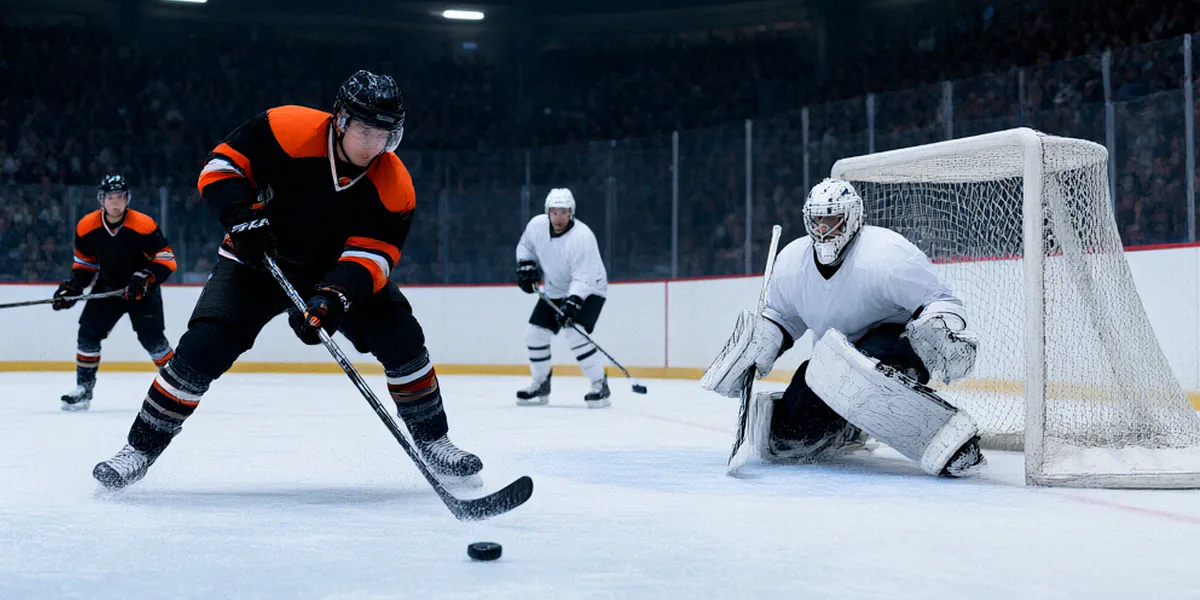
Every organized hockey game, from a peewee matchup in Mississauga to Game 7 of the Stanley Cup Final, follows the same basic blueprint: three periods of 20 minutes each, separated by two intermissions. That’s 60 minutes of regulation hockey. But anyone who has ever watched a game knows the clock on the wall tells a very different story.
Period Length and Intermissions
Under NHL rules, each period is 20 minutes of stop-time play, and intermissions run 17 minutes (18 in the playoffs, when teams get a little extra rest and TV gets a little extra room). The IIHF, which governs Olympic and World Championship play, uses the same 20-minute periods but typically shorter intermissions — often 15 minutes. Over the course of a game, those differences add up fast. A standard NHL broadcast is built around a 2.5-hour window, while an international game can wrap closer to 2 hours and 15 minutes.
Why the Clock Stops (and Starts) So Often
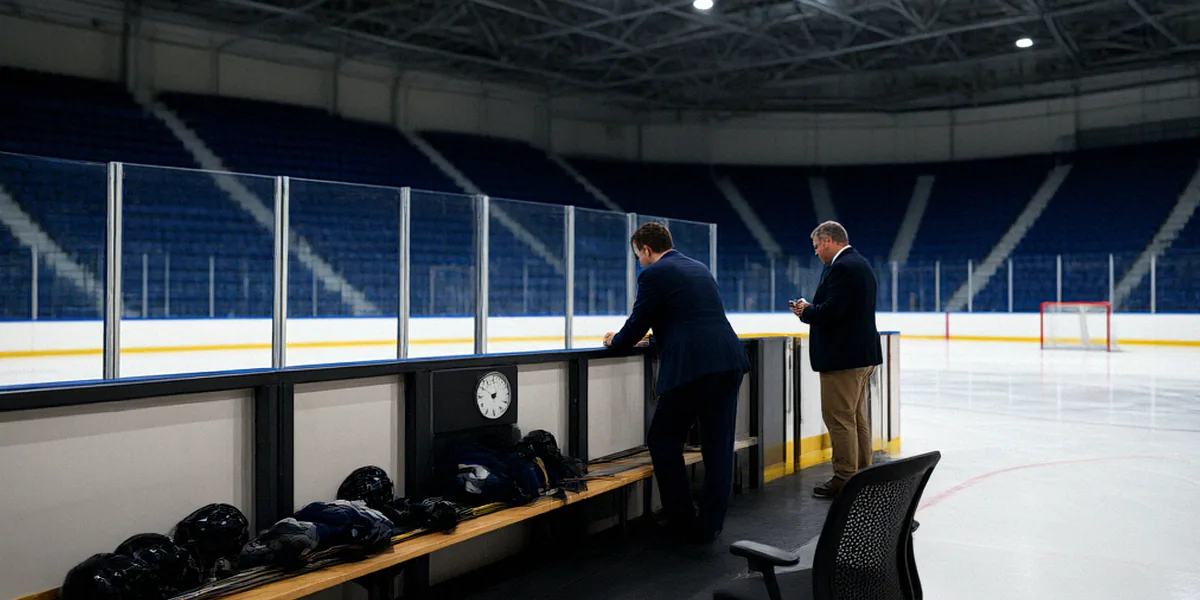
Hockey uses a stop-time clock, which means the game only counts down when the puck is in play. Every whistle — offside, icing, penalty, goal, frozen puck, injured player — halts the clock. Then there are the commercial breaks, which we’ll get to shortly. In a typical NHL game, the puck is actually in motion for roughly 60 to 65 minutes of real time, but the broadcast stretches across two and a half hours. The gap between those two numbers is where the real answer lives.
Real-Time Length: NHL vs. International Play
If you’re planning an evening around a hockey game, the league matters. The average NHL game lasts about 2 hours and 20 minutes to 2 hours and 30 minutes from puck drop to final horn, according to tracking across recent seasons. International games tend to run shorter, and the reasons are baked into the rulebook.
NHL Regular Season and Playoffs
NHL games carry the longest real-time footprint of any major professional league in the sport. Between commercial breaks, coach’s challenges, video reviews, and the league’s three commercial timeouts per period, an NHL broadcast routinely hits the 2.5-hour mark. Playoff games stretch longer still, partly due to the extended intermissions and partly due to the sheer physicality — more whistles, more scrums, more stoppages.
Olympics and World Juniors
International hockey trims the fat. At the Olympics and the World Juniors, games run on IIHF rules with shorter intermissions and far fewer TV timeouts. The World Juniors typically have shorter intermissions and fewer TV timeouts than NHL games, which is one of the reasons a tournament game can finish in under 2 hours and 20 minutes even with a raucous crowd and end-to-end action. The bigger ice surface in Olympic play also reduces some of the clutching and grabbing that slows NHL games down.
One famous exception proves the rule: the 2010 Olympic gold medal game between Canada and the USA went to overtime and lasted over 2 hours and 40 minutes — longer than most NHL regular-season games, thanks to the stakes, the stoppages, and the drama of Sidney Crosby’s golden goal.
Overtime and Shootouts: When Games Go Long
Regulation is only the beginning. When the score is tied after 60 minutes, hockey’s rules diverge sharply depending on the league and the stakes.
Regular Season Overtime and Shootouts
In the NHL regular season, teams play five minutes of 3-on-3 sudden-death overtime. If nobody scores, the game goes to a shootout — a skills competition that adds roughly 10 to 15 minutes to the broadcast. The IIHF and Olympic tournaments use a similar format in round-robin play, though gold medal games and other knockout rounds use full 20-minute sudden-death overtime periods instead.
Playoff Overtime and Historic Marathons
Playoff overtime is where hockey history gets written. NHL playoff games use full 20-minute sudden-death periods, repeated until someone scores. The 2020 Stanley Cup Final between the Tampa Bay Lightning and Dallas Stars had a game that went to multiple overtimes — Game 4 stretched to a fourth overtime before Kevin Shattenkirk ended it, pushing the game past the four-hour mark. And the 1972 Summit Series between Canada and the Soviet Union featured games that often exceeded 2.5 hours due to stoppages and intensity, with the famous Game 8 in Moscow becoming a national memory on both sides of the Cold War divide.
- NHL regular season: 5 minutes of 3-on-3 OT, then a shootout
- NHL playoffs: 20-minute sudden-death periods until a goal is scored
- Olympic gold medal games: 20-minute sudden-death overtime periods
- World Juniors knockout rounds: 10-minute OT, then a shootout
Historical Perspective: How Game Length Has Changed
Hockey’s 60-minute standard didn’t appear overnight. It evolved alongside the sport itself, shaped by rule-makers in North America and, later, by the arrival of Soviet and European teams who played a very different brand of hockey.
Early Hockey and the 60-Minute Standard
In the early 20th century, hockey games were often played with two 30-minute halves before the three-period format became standard. The NHL adopted 20-minute periods early on, but overtime rules were inconsistent for decades. The 1943-44 NHL season marked a turning point, when the league introduced regular-season overtime in various forms to break ties — a rule that has been tweaked, abandoned, and reintroduced many times since. The modern 3-on-3 overtime and shootout only arrived in 2005-06, following the lockout that reshaped the game.
Soviet and European Influences on Pace
Soviet hockey, built around the legendary CSKA Moscow and the national team’s relentless training methods, emphasized speed, passing, and conditioning over brute force. When the Soviets met NHL clubs in the 1972 Summit Series and later in the Super Series, the contrast was stark. Soviet games often featured fewer stoppages and more continuous flow, which meant less real time spent waiting for whistles. That influence slowly reshaped how North American teams approached the game, and it’s part of why modern hockey feels faster than the hockey of the 1960s.
What Affects How Long a Game Feels
There’s a difference between how long a hockey game is and how long it feels. A tight 1-0 playoff game between the Toronto Maple Leafs and Montreal Canadiens can feel like it lasts forever — in the best way — while a 6-1 blowout in a meaningless regular-season game can drag even at 2 hours and 15 minutes.
TV Timeouts and Commercial Breaks
TV timeouts are the biggest single factor in stretching an NHL game. The league schedules three commercial breaks per period, each around 90 seconds, plus additional stoppages for goals, penalties, and reviews. That’s roughly 15 to 20 minutes of pure commercial time per broadcast. International tournaments like the World Juniors cut that number significantly, which is why those games feel tighter and move faster.
Rivalries and Playoff Atmosphere
Rivalry games and playoff hockey carry their own gravitational pull. The intensity of a Leafs-Habs game in April, the roar of a Bell Centre crowd during a playoff run, or the tension of a Canada-Russia gold medal game at the World Juniors all compress time in a strange way. You look up, and three hours have vanished. The clock says 60 minutes, but the experience says otherwise.
FAQ
How long is a typical NHL game in real time?
The average NHL game lasts about 2 hours and 20 minutes to 2 hours and 30 minutes, including intermissions, TV timeouts, and stoppages. Playoff games often run longer, sometimes past three hours.
How long is a hockey game at the Olympics or World Juniors?
International games typically run shorter than NHL games — usually around 2 hours and 15 minutes — because of shorter intermissions and fewer TV timeouts. The World Juniors in particular move quickly, though overtime and shootouts can extend things.
Why did the 2010 Olympic gold medal game last so long?
The 2010 Olympic gold medal game between Canada and the USA went to overtime and lasted over 2 hours and 40 minutes. The stakes, the stoppages, and the sudden-death finish all pushed it well past a typical international game length.
What was the longest NHL game ever played?
The longest game in NHL history was a 1936 playoff marathon between the Detroit Red Wings and Montreal Maroons that went to six overtimes. In the modern era, multiple-overtime playoff games — like the 2020 Stanley Cup Final game between Tampa Bay and Dallas — routinely push past four hours.
Does the clock ever actually stop counting game time?
In hockey, the game clock only counts down when the puck is in play. Every whistle stops the clock, which is why a 60-minute game can take two and a half hours of real time to complete.
So how long is a hockey game? Officially, 60 minutes. In practice, somewhere between two and a half and four hours depending on the league, the stakes, and the night. From the 1972 Summit Series to the 2020 Stanley Cup Final to a random Tuesday night in Toronto, the true length of a hockey game is measured less by the clock and more by the moments that make us forget it’s even running.

Post Comment