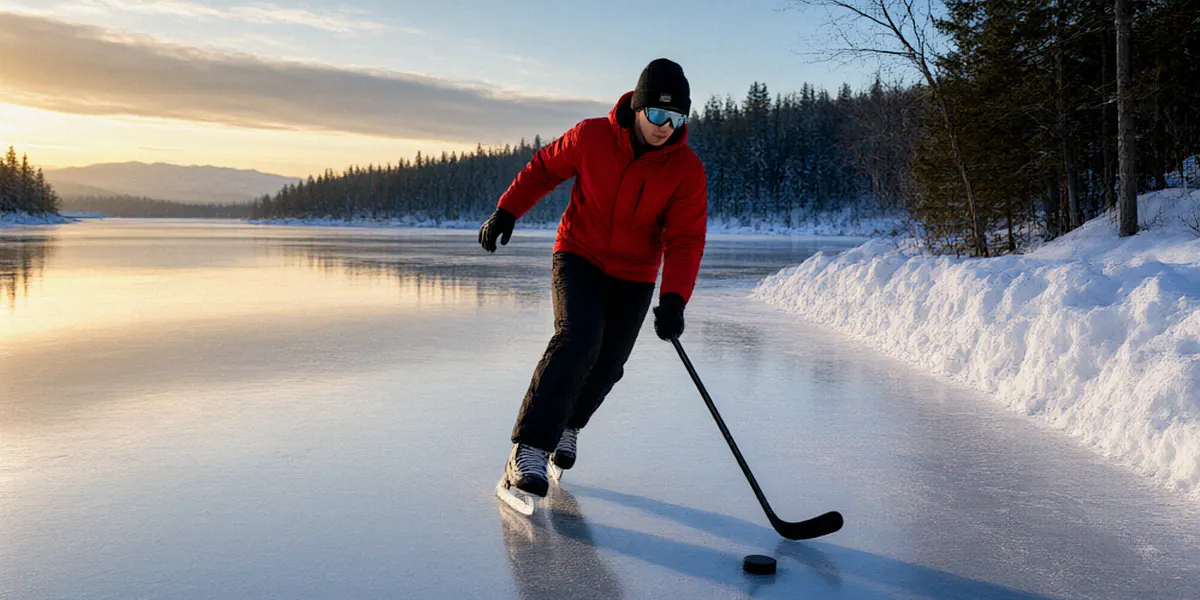
Outdoor Rinks Across Canada: Tips for Pond Hockey This Winter
There’s a moment every Canadian knows: the crunch of snow under boots, the scrape of a blade on fresh ice, and the sting of cold air as you tighten that last lace on a frozen pond. It doesn’t matter whether you’re in downtown Toronto or a small town in Saskatchewan — lacing up outdoors connects us to something bigger than the game itself. Outdoor hockey is where our national identity was forged, and it’s still where many of us fall in love with the sport all over again every winter. So grab your thermos, layer up, and let’s talk about how to make the most of pond hockey season.
The Enduring Magic of Canadian Pond Hockey
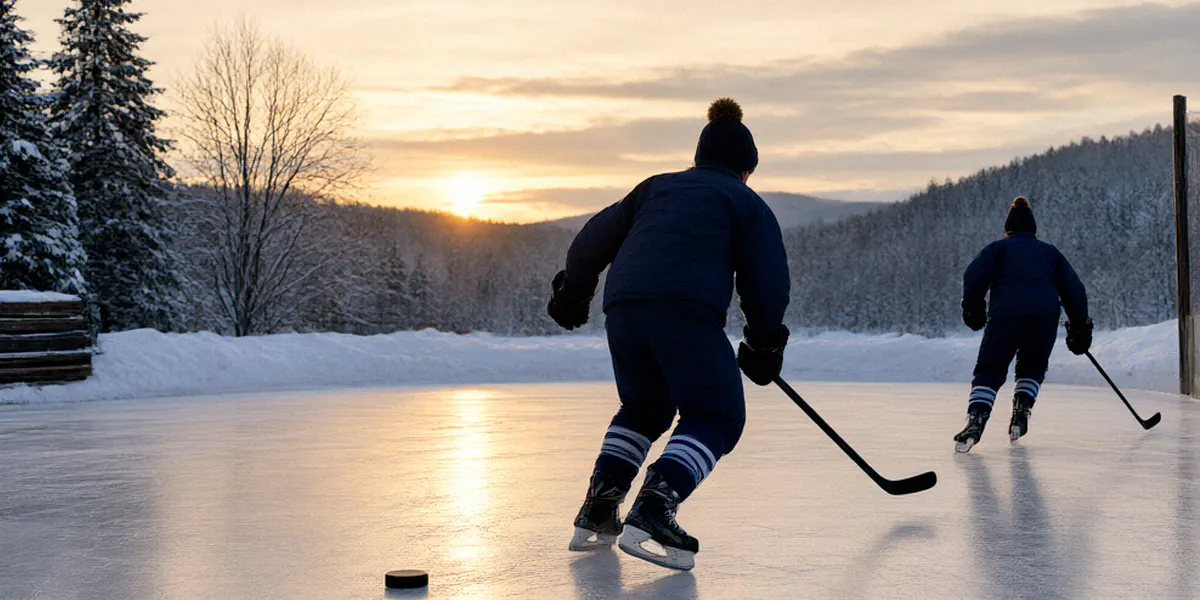
Before arenas, before million-dollar contracts, before television broadcasts, there was ice — natural, uneven, and gloriously free. For generations of Canadians, the outdoor rink has been the first classroom of hockey. It’s where creativity gets rewarded, where you learn to keep your head up, and where the game belongs to everyone.
From Frozen Ponds to National Obsession
Hockey’s roots in Canada run straight through frozen lakes and backyard floods. Long before the NHL existed, communities gathered on natural ice to play a game that would come to define us. The outdoor rink is the original arena, and its influence hasn’t faded. Wayne Gretzky honed his skills on a backyard rink in Brantford, Ontario — the same rink his father Walter flooded every winter, and the same ice where a young Wayne would spend hours after school stickhandling against makeshift obstacles. That story isn’t unique; it’s the Canadian template.
How the 1972 Summit Series United a Nation
When we talk about hockey history, we can’t skip the 1972 Summit Series. That eight-game clash between Canada and the Soviet Union is a defining moment in Canadian hockey history — a series that stopped the country cold. Kids who had grown up on outdoor rinks watched Paul Henderson score the winning goal and understood, in that instant, what the game meant to the nation. Many of those same kids went back to their ponds the next morning pretending to be Henderson. The Summit Series remains a touchstone because it reminded us that hockey, at its core, is about pride, grit, and community — values that outdoor rinks teach long before any scoreboard does.
Finding the Best Outdoor Rinks in Canada
Part of what makes winter bearable in this country is the sheer variety of outdoor skating options. Whether you’re chasing a bucket-list experience or just want a local sheet of ice within walking distance, Canada delivers.
Iconic Destinations: Rideau Canal and Lake Louise
The Rideau Canal Skateway in Ottawa is the world’s largest naturally frozen skating rink, stretching roughly 7.8 kilometres through the heart of the capital. It’s a bucket-list skate for any Canadian, complete with Beavertails and hot chocolate along the way. Out west, Lake Louise in Alberta offers a postcard-perfect setting — frozen glacial water framed by mountain peaks, with a maintained rink area right on the lake’s surface. Both spots remind us that outdoor hockey and skating aren’t just recreational; they’re iconic Canadian experiences.
Community Rinks: Your Local Gem
You don’t need a national landmark to have a great skate. Toronto and Montreal alone maintain hundreds of outdoor rinks each winter, many with boards, lights, and Zamboni-like resurfacing schedules. Smaller towns across the prairies and Atlantic Canada often rely on volunteer-run rinks that become the social hub of the neighbourhood. Here’s what to look for when scouting your local option:
- Well-maintained ice with boards and lighting for evening skates
- Nearby warming huts or community centres
- Posted hours and rules from the municipality or volunteer group
- Safe access points and clearly marked ice conditions
Essential Gear and Safety Tips for Pond Hockey
Pond hockey is more forgiving than competitive play, but that doesn’t mean you should skip the essentials. Cold injuries, wet feet, and dull skates can end a session fast. Here’s how we approach it.
Layering Like a Pro: Base Layers to Outer Shells
Start with a moisture-wicking base layer — merino wool or synthetic, never cotton. Add an insulating mid-layer like fleece or a light down vest, then finish with a windproof, water-resistant shell. Brands like Bauer and CCM make hockey-specific outerwear that balances warmth with mobility. Don’t forget gloves with grip, a toque that covers your ears, and wool socks with a spare pair in your bag.
Skate Care and Protection: Helmets, Pads, and More
Sharp skates make everything easier. Get them profiled and sharpened at least once a season, and dry them thoroughly after every skate to prevent rust. Helmets aren’t just for kids — Bauer and CCM both make comfortable options that fit under a hood. Elbow and knee pads are optional for casual skates but smart for shinny. Above all, check ice thickness before you step on. A minimum of 10 centimetres (four inches) of clear, solid ice is the general rule, and you should always avoid ice near inlets, outlets, or pressure cracks. Check local ice condition reports and never skate alone on unfamiliar water.
Pond Hockey Rules and Etiquette: What You Need to Know
Pond hockey has its own culture, and understanding the unwritten code makes you a better participant. It’s also a great way to appreciate how NHL rules explained for Canadian fans differ from the loose, self-governed version we play outdoors.
Unwritten Rules of the Pond
Ask any longtime pond player and they’ll recite the same basics: no slap shots (nobody wants to chase a puck into the snowbank), rotate goalies every few minutes, call your own penalties, and keep the game inclusive. If someone’s clearly newer to the game, you pass them the puck. If you’re the best player out there, you don’t hog the puck. The pond rewards generosity and humility.
How Pond Hockey Differs from the NHL
NHL rules explained for Canadian fans often hinge on structure: offsides, icing, line changes, and video review. Pond hockey throws most of that out the window. There are no referees, no offside lines, and no fixed periods — players self-police and games end when everyone’s tired or the sun goes down. It’s the purest form of the game, and honestly, it’s where many of us remember why we love hockey in the first place.
The Role of Outdoor Rinks in Canadian Hockey History
Outdoor rinks aren’t just nostalgia — they’re the foundation of Canada’s hockey pipeline. From grassroots development to international stardom, the pond is where it starts.
IIHF Hall of Fame Legends Who Started on Ponds
The IIHF Hall of Fame includes many players who learned the game outdoors. Before they wore national colours or lifted international trophies, they were kids on frozen lakes with numb fingers and oversized gloves. That outdoor upbringing shaped the creativity, resilience, and hockey IQ that made them legends on the world stage.
World Juniors Canada: The Outdoor Connection
World Juniors Canada has produced countless stars who grew up playing pond hockey. Watch any tournament and you’ll see it — the improvisation, the edge work, the willingness to battle in tight spaces. Those skills are born on outdoor ice, not in climate-controlled arenas. When we cheer for Team Canada in December and January, we’re watching the descendants of backyard rinks and community ponds.
Building and Maintaining Your Own Backyard Rink
If you’ve ever dreamed of your own Gretzky-style backyard rink, winter is the time to make it happen. It’s more work than it looks, but it’s worth every flooded evening.
Planning and Setup: Tarps, Boards, and Water
Start by choosing a flat, shaded area of your yard. Kits like NiceRink make the process easier with tarps, brackets, and liner systems designed for Canadian winters. You’ll need:
- A durable liner or tarp sized to your rink dimensions
- Wooden or plastic boards to contain the ice and water
- A reliable water source and hose that won’t freeze mid-flood
- Several cold, clear nights to build ice in thin layers
Resurfacing and Maintenance Tips
Once your base is set, resurface with a thin layer of water after each skate — early morning or late evening works best. During freeze-thaw cycles, avoid flooding when temperatures rise above freezing, and shovel snow promptly to prevent insulation that slows ice formation. If you get a warm spell, don’t panic; wait for the cold to return and rebuild gradually.
FAQ
How thick should ice be before skating on a pond?
At least 10 centimetres (four inches) of clear, solid ice is the general minimum for small groups. Always check local reports and never assume ice is safe just because it looks solid.
What gear do we recommend for beginner pond hockey players?
A properly fitted helmet, sharpened skates, gloves, and layered clothing are essential. Elbow and knee pads are optional but recommended for shinny games.
Is the Rideau Canal Skateway really the world’s largest naturally frozen rink?
Yes — the Rideau Canal Skateway in Ottawa is recognized as the world’s largest naturally frozen skating rink, spanning roughly 7.8 kilometres through the city.
Why is the 1972 Summit Series so important to Canadian hockey history?
The 1972 Summit Series is a defining moment in Canadian hockey history — it united the country and reminded Canadians how deeply hockey is tied to national identity.
Can pond hockey really develop future NHL and World Juniors Canada players?
Absolutely. World Juniors Canada has produced countless stars who grew up playing pond hockey, and the IIHF Hall of Fame includes many players who learned the game outdoors.
Outdoor rinks are more than just ice. They’re where memories are made, where communities come together, and where Canada’s hockey heritage lives on — one frozen pond, one backyard flood, one shinny game at a time. So this winter, lace up, get outside, and keep the tradition alive.

Post Comment